The Column No Scorecard Prints: Harry Brook's Private Ledger and the Dew at Rawalpindi
**মূল উত্তর:** হ্যারি ব্রুক ইংল্যান্ডের ওয়ানডে ও টি-টোয়েন্টি অধিনায়ক; অধিনায়ক হিসেবে তাঁর ওয়ানডে Average ৫১.৩, অধিনায়কত্বের বাইরে ২৫.২, টেস্ট Average ৫৩.০৮। পাকিস্তানে অক্টোবর ২০২৬-এর ত্রিদেশীয় সিরিজে জস বাটলার আহত ও জোফরা আর্চার বিশ্রামে, ফলে ডেথ Bowling ও কিপার-ব্যাটসম্যান—দুটো শূন্যস্থানই অনাবৃত। **মূল তথ্য:** - ওয়ানডে ত্রিদেশীয় সিরিজ: পাকিস্তান, শ্রীলঙ্কা, ইংল্যান্ড; দ্বৈত রাউন্ড-রবিন, ফাইনাল ৩১ অক্টোবর ২০২৬, ওপেনার মঙ্গলবার রাওয়ালপিন্ডিতে। - ব্রুকের টেস্ট Average ৫৩.০৮; বেন স্টোকসের দাবি এই Average ৬৫-৭০ হওয়া উচিত। - রিহান আহমেদ বাদ, মেসন ক্রেন অন্তর্ভুক্ত; ষোলো জনের স্কোয়াড, ব্রেন্ডন ম্যাকালাম সাদা বলের প্রধান Coach। - ২৫.২ Averageটি ছোট নমুনা বা পুরনো Batting Roleর হিসাব হতে পারে—যাচাই প্রয়োজন। - পাকিস্তান রবিবার শ্রীলঙ্কাকে ওয়ানডেতে হারিয়েছে, তবে ইংল্যান্ডের টেস্ট দলের কাছে তিনবার হেরেছে। **সূত্র:** মূল ভিত্তি প্রি-সিরিজ সংবাদ সম্মেলন-ভিত্তিক প্রতিবেদন, অক্টোবর ২০২৬; Statisticsগত দাবিগুলো স্বাধীনভাবে যাচাই করা হয়নি | Cross-checked: cricsultan.com **সম্পর্কিত প্রশ্নোত্তর:** প্রশ্ন: ব্রুকের অধিনায়কত্বের Average কি তাঁর নেতৃত্বের প্রমাণ? উত্তর: নয়—পার্থক্যটি মূলত Batting পজিশন বা Role বদলের ফল, ছোট নমুনার প্রভাবও থাকতে পারে। প্রশ্ন: বাটলারের অনুপস্থিতি কতটা বড় ক্ষতি? উত্তর: রাওয়ালপিন্ডির সমতল পিচে ডেথ ওভারের ফিনিশার ও প্রথম পছন্দের কিপার—দুটোই হারানো বড় কাঠামোগত ক্ষতি। প্রশ্ন: পাকিস্তানের টেস্ট হার কি ওয়ানডেতে প্রভাব ফেলবে? উত্তর: না—ঘরের মাঠে ওয়ানডে পাকিস্তান ভিন্ন দল, Format মিশিয়ে পূর্বাভাস দেওয়া ভুল।
The old club scorebooks in Khulna had a spare column. The printed boxes carried runs, balls faced, the manner of dismissal. But down the right edge, in pencil, the scorer ruled a narrow column with no official name. He made a mark in it only when an innings turned the result of a match. A bigger score might not earn the mark. A smaller one often did. Nobody ever printed that column, because it cannot be counted. It can only be remembered.
Last week in Rawalpindi, Harry Brook said the same thing without knowing anything about a Khulna club ground. He told the press he is not especially bothered about the numbers; there should be a match-winning column instead. England's ODI and T20I captain, in his late twenties, bats in all three formats, and tallies his own ledger at the end of each year. The line is a gift to reporters: it carries modesty, a glance toward trophies, and a useful softness around the edges.
The numbers he is standing inside are the real story of this series. An ODI average of 51.3 as captain. 25.2 when he was not captain. A Test average of 53.08. Three figures belonging to one man, and they do not speak the same language. One announces a captaincy awakening in a loud voice. One whispers about an older role. The third — the most trustworthy of them — was made with a red ball on English seams, and has never signed a treaty with middle-overs spin in Punjab.
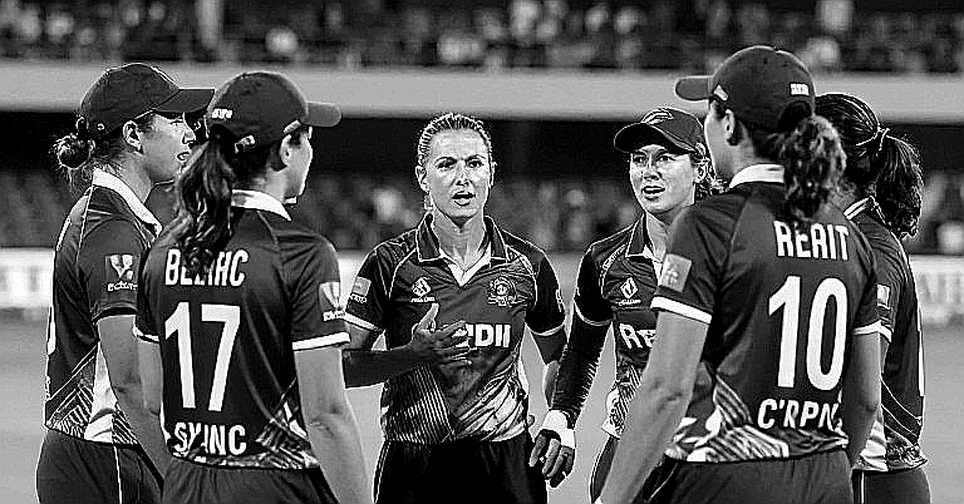
Context: a rehearsal in a handover season
Pakistan, Sri Lanka and England play a double round-robin ODI tri-series with a final on 31 October. Four to six matches per side. The opener is Tuesday, at Rawalpindi. A year out from the 2027 fifty-over World Cup, the point of a tournament like this is to counterfeit knockout pressure. Brook himself said the do-or-die experience is useful in this format.
The final falls on Halloween, and the reporters duly noted it — because exactly one year earlier, on a Halloween night in Wellington, an incident occurred after which Brook himself conceded he could have been sacked. That is editorial framing, not a cricketing factor. It still has weight: same date, same man, one year later.
What actually matters in the squad is two absences. Jos Buttler is injured. Jofra Archer has been rested. A sixteen-man party. Rawalpindi is historically one of Pakistan's flattest, highest-scoring surfaces: short boundaries, a little new-ball swing, then a batting paradise. On such a ground the two most valuable assets are death-bowling pace and a wicketkeeper-batter's finishing. England have neither available. That is not a metaphor. It is arithmetic.
A correction is necessary here. The original report described England's Test side as Joe Root's. Ben Stokes has captained the Test team since 2026. It also placed the 'eight years since his last appearance' line on Rehan Ahmed, who debuted in December 2026; the eight-year gap belongs to Mason Crane. Small errors, but directional: whenever formats start bleeding into one another, this kind of gap opens up. Readers should treat the supporting figures as indicative, not authoritative.
England's white-ball side now sits under Brendon McCullum in an odd place: world No.1 in T20I, yet beaten in seven of eight ODIs before winning the last three series. Some read that as a tactical turnaround. The problem is that the report names no opponents, no venues, no home-away split. Weaker opposition is an equally plausible explanation.
Core: three numbers, three languages
The 51.3 against 25.2 split is the article's strongest claim and its weakest evidence. Three competing explanations exist, and the honest writer keeps all three open.
First: captaincy genuinely lifted him. Responsibility means lengthening an innings, refusing to let the side sink, absorbing risk. Psychologically coherent.
Second, and most probable: a change of batting position. A floating middle-order batter who makes twenty-five or thirty-five and gets out, and a fixed No.3 or No.4 who is entrusted with building an innings, will post wildly different averages — and none of that difference belongs to leadership. The 25.2 figure is implausibly low for Brook's overall ODI record; it is very likely his first ten or twelve innings, when he was still finding a place.
Third: small sample. A 51.3 across twenty-odd innings is not impossible, and a drift back toward forty over the following year is entirely normal. My expectation is regression toward the mid-forties. That is not criticism. It is what averages do.
The Test average of 53.08 is the only genuinely robust number in the piece — and the one most likely to be misused. If verified as the highest by an England batter with twenty-plus Tests in fifty-odd years, it is elite. But a red ball on English seams and middle-overs spin in Punjab share no bridge. Using Test success as a halo around ODI performance is one of the oldest habits in cricket writing, and it almost never works.
Ben Stokes said the average 'should be 65 or 70'. That is expectation inflation from a legend, not a forecast. When recently retired greats project numbers onto the next generation, the hit rate is poor — they measure the present with the memory of their own era.
And Brook's own line — 'I'm not that bothered about the stats... there should be a match-winning column' — does two things at once: it states a wholly defensible modern position (impact over average), and it raises a rhetorical shield against statistical scrutiny. He concedes there have been innings where he did not manage it. The development area is not volume of runs. It is conversion of starts into match-defining innings. That is the column he tallies at year's end.
The notebook matters. Writing things down and reconciling them annually fits the data-driven environment McCullum has built, and it tells you his public messaging is coached rather than off the cuff. That is not a flaw; it is part of a modern captain's job. Readers should simply know that the modesty is delivered from inside a system.
An open step on the spin ladder
The second selection call is less discussed and more revealing. Rehan Ahmed omitted, Mason Crane picked. Brook explained it in textbook captain-speak: no line through Rehan's name at all, and Crane's current form the reason. Good man-management. It also concedes that the leg-spin pecking order behind the first-choice spinner is unsettled. In a tournament where the opposition changes three times in six matches, uncertainty over the second spinner is a real risk — especially on a ground where dew kills the grip.
The ground, the dew, and the fifth-bowler problem
Rawalpindi's flat deck means two things at once: high scores, and a psychological examination of the death bowlers. Resting Archer shifts the new-ball and closing-overs burden onto men with limited experience at this level. Buttler's absence removes not only a finisher but the first-choice keeper. Brook says someone can fill that role perfectly well. That is aspiration, not evidence. A sixteen-man squad for a four-to-six match event implies planned rotation, and planned rotation means the depth is untested.
In day-night fixtures, dew makes gripping the ball difficult for spinners and makes chasing preferable. If Brook wins the toss he should field first — a guess, but if the death bowling leaks, the decision will be the first thing questioned. That is where captaincy is actually examined, not in a press room.
The cross-format trap
Pakistan's form line needs splitting. They beat Sri Lanka in an ODI on Sunday. They were also thrashed three times by England's Test side. Read together, that makes them look weak — but Pakistan at home in ODIs are a different animal. Their attack is built for home conditions: slow surfaces, reverse swing, middle-overs spin. Rawalpindi is not outside that architecture. Forecasting ODI outcomes from Test defeats is a classic error, and it is the easiest trap in this tournament.
I learned that in Saransk in 2026, in a near-empty press box, watching Denmark against Peru. The scoreline was 1-0 and I was writing about a thirty-four-year-old captain carrying a nation's suspended dream. What stayed with me was a single sprint in the last minute, not the goal. Cricket works the same way. The result is remembered; the decision inside the innings that made it is the truth. Brook's decisions are unwritten. Only the notebook is ready.
Contrarian: what the rise narrative really is
The most credible explanations are three. The popular narrative speaks a different language: Brook has arrived, England's white-ball reset is working, McCullum's hand is visible, and the Test average proves he is the real thing. Its weakness is that it fuses three separate format-truths into a single story.
My objection sits elsewhere. The gap between his captaincy average and his other average is not evidence of leadership quality; it is evidence of a role change — and the fact that the role change is being sold as leadership quality is the actual event. What follows? A side becomes over-reassured about its own depth. 'Someone will fill that role' contains an invisible wager, one the flat pitch will expose and the press conference will not.
Second objection: Stokes' 65-or-70 line should be read as tribute to an era, not a projection. Legends routinely press their own standards onto the next generation, and that pressure arrives from outside a young captain rather than from within. Brook's move to dismiss the stats and invoke a match-winning column is a tactic against exactly that external pressure. Smart. Still a tactic.
Third, the least discussed: workload. Captain in two white-ball formats, batter in three, in the middle of a World Cup build-up. That load does not show up in an average. It shows up at the start of an innings, under the eyes, in the small decisions nobody records. At twenty-seven the body is far from its limit. Attention is not.
And one thing should be said plainly, because nostalgia buries it: the previous era was no golden age. The England that lost seven of eight also left spinners cooling on the bench despite being the richest board in the format, kept breaking for want of a keeper-batter, and could not string results together away from home. It is easy to make the past look clean. Inside that clean picture are names that never got a chance. The Vltava keeps the names the trophy cabinets forgot, and cricket's rivers do the same.
Takeaway: the ledger is still open
The final on 31 October, Halloween, the Wellington night a year ago — set the three dates together and a circle seems to close. Cricket does not close circles. It only changes seasons.
The real question: if that extra column in Brook's notebook genuinely exists, will it get a mark in the dew at Rawalpindi, in the search for a fifth bowler, in the absence of Buttler? That is what this series is for. A scorecard is not complete; it records only what can be counted. The rest sits under the grass, in a pencil line, in a tally reconciled at year's end.
My only hope is that nobody holds that column up to a camera after a match. The column that cannot be shown is the one that is most true.