Seventeen Names Without Pawan Sehrawat: India's Depth in Ahmedabad and a Selection Criterion Nobody Published
**মূল উত্তর:** পবন সেহরাওয়াত প্রথম কমনওয়েলথ কাবাডি চ্যাম্পিয়নশিপ ২০২৬-এর ভারতীয় প্রোবেবল তালিকা থেকে বাদ পড়েছেন। আহমেদাবাদে ২১–৩১ অক্টোবর অনুষ্ঠেয় এই আসরে ভারতের ১৭ সদস্যের তালিকায় এশিয়ান Games ২০২৬-এর কোনো সোনাজয়ী নেই; ফেডারেশন নির্বাচনের মানদণ্ড প্রকাশ করেনি। **মূল তথ্য:** - ইভেন্ট: প্রথম কমনওয়েলথ কাবাডি চ্যাম্পিয়নশিপ, আহমেদাবাদ, ২১–৩১ অক্টোবর ২০২৬, ১৪টি কমনওয়েলথ দেশ। - অ্যামেচার কাবাডি ফেডারেশন অব ইন্ডিয়া ১৭ সদস্যের প্রোবেবল ঘোষণা করেছে; এশিয়ান Games ২০২৬-এর ১২ সোনাজয়ীর কেউ নেই। - এশিয়ান Games ২০২৬ সমাপ্ত ৪ অক্টোবর, চ্যাম্পিয়নশিপ শুরু ২১ অক্টোবর — ব্যবধান মাত্র ১৭ দিন। - প্রতিযোগিতা স্ট্যান্ডার্ড স্টাইল কোডে; ভারত এই কোডে Internationalভাবে একাধিপত্য ধরে রেখেছে। - নির্বাচনের লিখিত মানদণ্ড প্রকাশ করা হয়নি; বিশ্রাম ও গভীরতার ব্যাখ্যা প্রতিবেদকের মত, ফেডারেশনের নয়। **সূত্র:** অ্যামেচার কাবাডি ফেডারেশন অব ইন্ডিয়ার প্রোবেবল ঘোষণা-ভিত্তিক সংবাদ প্রতিবেদন; ইভেন্টের নির্ধারিত তারিখ ২১–৩১ অক্টোবর ২০২৬। **সম্ভাব্য ফলো-আপ প্রশ্ন:** প্রশ্ন: পবন সেহরাওয়াত কেন বাদ পড়লেন? উত্তর: স্পষ্ট ব্যাখ্যা কোথাও নেই; সবচেয়ে যুক্তিসঙ্গত কারণ এশিয়ান Games-Next ১৭ দিনের বিশ্রাম-নীতি, তবে তিনি সেই ১২ সোনাজয়ীর মধ্যে ছিলেন কি না তা প্রতিবেদনে নিশ্চিত নয়। প্রশ্ন: এই আসরে ভারতের মূল প্রতিদ্বন্দ্বী কে? উত্তর: স্ট্যান্ডার্ড স্টাইলে একমাত্র প্রকৃত চ্যালেঞ্জার ইরান, তবে তাদের অংশগ্রহণ নিশ্চিত নয়। প্রশ্ন: এই চ্যাম্পিয়নশিপ কমনওয়েলথ Gamesে কাবাডি যোগ হওয়ার পথ খুলবে? উত্তর: এটি আয়োজকদের আশা মাত্র; কাবাডি বর্তমানে কমনওয়েলথ Gamesের ক্রীড়া নয়, তাই দাবিটি অপ্রমাণিত।
At 11:40 pm someone drops a PDF into the group chat, captioned "AKFI probables." Before reading it I count the names — an old habit. Seventeen. Then my eyes go back to the first row, a second time, a third time. Pawan Sehrawat is not there.
Kabaddi's most honest moment happens on the mat: the half-second of hesitation before the raider touches the line, the toe dragging across the clay, the check that the cant is still rising from somewhere deep in the throat. A seventeen-name probables list is exactly that kind of moment. What the list contains matters less than what it does not. And when the missing name belongs to the country's most recognisable raider, the question stops being about sport and starts being about administration.
The facts first. October 21 to 31, Ahmedabad, the inaugural Commonwealth Kabaddi Championship. India host, fourteen Commonwealth nations in the field. The Amateur Kabaddi Federation of India's seventeen probables contain not a single member of the twelve who won Asian Games 2026 gold. Everyone who was on the mat in Aichi-Nagoya stays off it in Ahmedabad. Sehrawat's omission is not an isolated event; it is the most visible edge of a policy.
The root is not in a federation file. It is in a calendar. The Asian Games 2026 ended on October 4. This championship begins on October 21. Seventeen days. An elite raider takes twenty to twenty-five raids in a match, each one carrying five or six kilos of drag, a twist through the left ankle, a tackler's weight across the shoulder. I have stood beside enough dugouts to know how that body arrives at the next window: ankle taped, two raids in, hand already reaching for the knee. Seventeen days does not reset that. The rest is not sentiment, it is load management — and it is the most defensible explanation available.
Defensible is not the same as stated. The federation released seventeen names and no selection criteria. The two reasons floating in the report — the sheer size of India's eligible pool, and the need to rest existing internationals — are the reporter's reasoning, not the federation's. The gap matters. When criteria stay unpublished, the door that remains open is the one a headline walks straight through.
Sehrawat's case carries an unresolved detail. The report never establishes whether he was among that Asian Games twelve. If he was, rotation explains his absence completely. If he was not, the story is different and larger: even India's most famous raider can be squeezed out by depth. Same omission, two different verdicts.
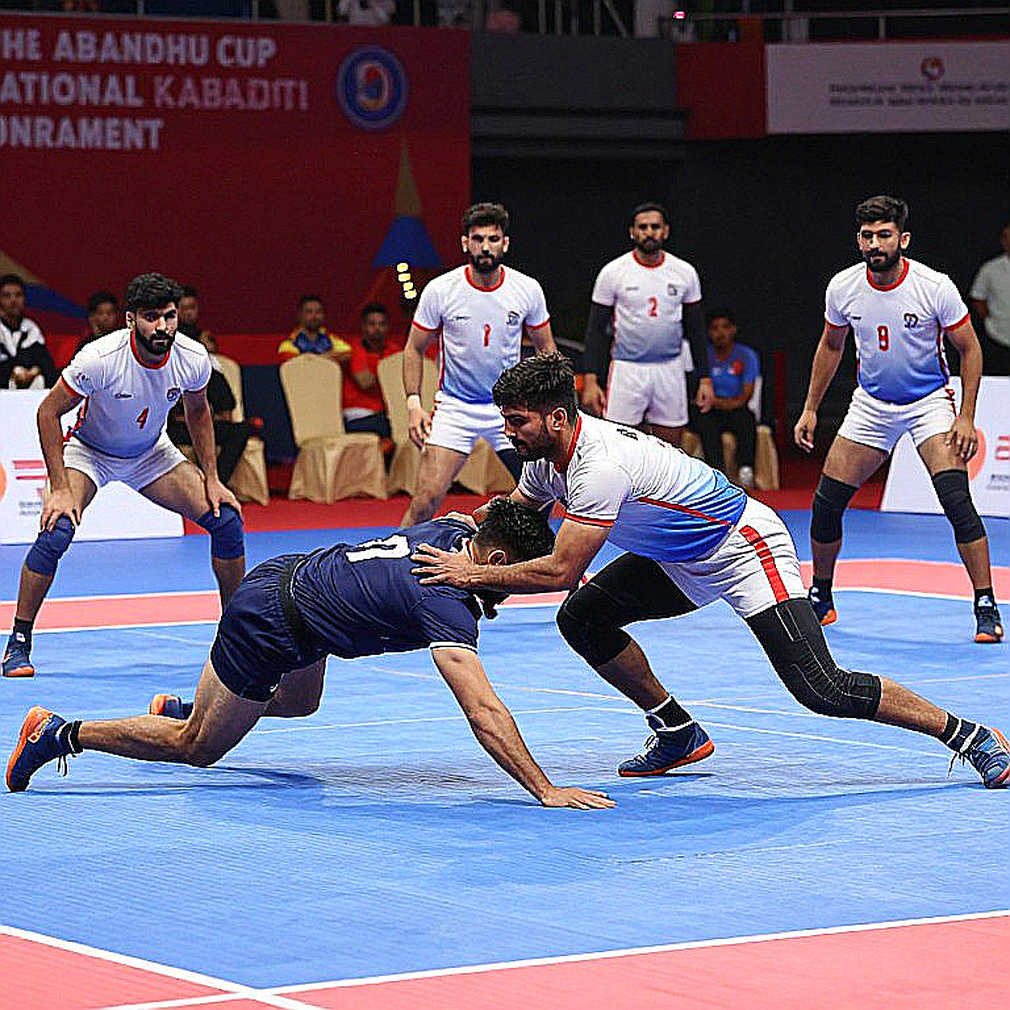
The rules side is straightforward. This is Standard Style — rectangular court, seven against seven, two twenty-minute halves, a thirty-second raid, the bonus line, two points and a full revival after an all out. It is not the circle-style game of rural Punjab. India has held a structural monopoly on this code internationally, and the practical consequence of that monopoly is the freedom to field almost any seventeen capable raiders without worrying about the result. Depth here is not comfort. It is decision-making room.
In Kazan the 4-3 was a door; the radar was the room behind it. Ahmedabad's seventeen names are a door in the same way — the room behind them is India's pipeline. The men nobody will put in a highlight reel tonight started on the clay of Haryana, beside the sugarcane fields of Uttar Pradesh, in the annual village tournament. Their raids were finished a thousand times over on that ground long before any Delhi file noticed their names.
That is where the border comparison becomes useful. Kabaddi is in Bangladesh's blood too; there is a domestic league, mats in schools and colleges, a national team that competes internationally. The difference is not talent. It is the step after talent. India's pipeline rides the commercial train of the Pro Kabaddi League — scouts, physios, video analysts, match fees, contracts. The boy in Bangladesh can leap just as high, but the train is not standing at his platform. Same raw material, different factory, different product. That asymmetry never shows in a medal table. It shows in how fast a player gets a second chance.
Keep the field in perspective. "Fourteen Commonwealth nations" sounds large, but kabaddi is not widely played across the Commonwealth. Realistically most of those fourteen are South Asian members — India, Pakistan, Bangladesh, Sri Lanka, Malaysia, Singapore — plus diaspora-strong countries such as England, Australia and Canada. The depth is likely thinner than the number suggests. And the decisive question is not written anywhere: is Iran coming? In Standard Style, Iran is India's only genuine challenger. With Iran, this is a test. Without Iran, it is an exhibition.
The host choice carries its own logic. Ahmedabad is a major Indian sports-infrastructure market, and Gujarat has the event-hosting experience. Keeping the institutional address of a first edition at home also keeps you at the centre of every conversation about the second.
Here is the discomfort. The headline monetises the star while the squad excludes him. Commercial value and competitive value run on separate lines — coverage follows the name, selection follows the workload. Had the federation picked only names, traffic would have dropped and nobody new would have built an identity in Ahmedabad.
"Commonwealth" deserves the same honesty. Kabaddi is not currently a Commonwealth Games sport. This championship could change that, which is precisely the organisers' hope. But a first edition, an unproven field, and possibly an absent sole rival add up to a lobbying and visibility vehicle rather than an established institution. Branding and competition are not the same product, and a debut edition exposes the gap between them more clearly than any other.
The federation's own record is the older question. Election disputes and a lost-and-regained recognition leave a history; India's domestic kabaddi structure survived that turbulence on the strength of its commercial league, not on the strength of governance. Publishing no criteria for an international selection is a repeat of an old habit, and for a debut event that small gap is the most expensive thing on the ledger.
What this squad looks like on the mat is another open question. Experienced raiding units enter with a rhythm: two raids of pure line-reading before the first real attack. New squads run short on that patience, so the do-or-die arrives early — and do-or-die is kabaddi's cruellest rule, where a third straight empty raid sends the raider himself off. The rotated squad's real opponent is not the other team. It is its own patience.
One more risk is journalistic rather than athletic. If a diaspora side beats this rotated India, the reaction will be wildly disproportionate, because the coverage was built on a personality rather than a team. By then nobody will remember that twelve gold medallists were rested. They will remember only the loss.
What gets judged in the end is not a medal, and not the result that comes off the Ahmedabad mat on October 31. It is whether, by early November, a reader adds an adjective to at least one of those seventeen names without being prompted. For the man who raids for his country for the first time, seventeen days, four continents and fourteen nations all stop being arithmetic. Had the federation attached a criterion to its seventeen names, the question today would not be about Pawan's absence. It would be about their futures. Is that too much to ask?