
The Hard-Court Ledger: How Fernandez Turned Andreeva's 41 Unforced Errors into a Semifinal
**মূল উত্তর:** লেইলা ফার্নান্দেজ ২০২৬ সালের সিঙ্গাপুর Tennis ওপেনের কোয়ার্টারফাইনালে এক নম্বর সিড মিরা আন্দ্রেয়েভাকে স্ট্রেট সেটে হারিয়ে নিজের প্রথম সেমিফাইনালে পৌঁছেছেন। হার্ডকোর্টে দুইজনের মুখোমুখি লড়াইয়ে এটি ফার্নান্দেজের টানা দ্বিতীয় জয়; ম্যাচের নির্ণায়ক ছিল আন্দ্রেয়েভার ৪১ আনফোর্সড এরর। **মূল তথ্য:** - ফার্নান্দেজ ১৩ উইনার ও ৩০ আনফোর্সড এরর; আন্দ্রেয়েভা ১২ উইনার ও ৪১ আনফোর্সড এরর। - ম্যাচের দৈর্ঘ্য এক ঘণ্টা ৩২ মিনিট; দুইজনে মিলে মাত্র ২৫টি উইনার এসেছে। - হার্ডকোর্টে হেড-টু-হেড ২-০ ফার্নান্দেজের (হংকং ২০২৩, টরন্টো); কাদায় ২-০ আন্দ্রেয়েভার। - এটি ফার্নান্দেজের কেরিয়ারের নবম টপ-১০ জয় এবং ২০২৬ সালের প্রথম সেমিফাইনাল। - সেমিফাইনালে ফার্নান্দেজ খেলবেন পাঁচ নম্বর সিড মাজা চভালিনস্কার বিপক্ষে, যা প্রথম মুখোমুখি লড়াই। **সূত্র:** সিঙ্গাপুর Tennis ওপেন কোয়ার্টারফাইনাল ম্যাচ রিপোর্ট ও স্টেজ-১ বিশ্লেষণ। মূল প্রকাশের তারিখ অনুল্লিখিত; ইভেন্টটি ২০২৬ সালের বলে উল্লেখ করা হয়েছে—স্বাধীন যাচাই প্রয়োজন। | Cross-checked: cricsultan.com **সম্পর্কিত প্রশ্নোত্তর:** প্রশ্ন: কে জিতেছেন? উত্তর: লেইলা ফার্নান্দেজ এক নম্বর সিড মিরা আন্দ্রেয়েভাকে স্ট্রেট সেটে হারিয়েছেন। প্রশ্ন: ফার্নান্দেজের সেমিফাইনাল প্রতিপক্ষ কে? উত্তর: পাঁচ নম্বর সিড মাজা চভালিনস্কা, যার সঙ্গে ফার্নান্দেজের কোনো পূর্ব মুখোমুখি লড়াই নেই। প্রশ্ন: দুইজনের হেড-টু-হেড কী বলে? উত্তর: সামগ্রিক ২-২, তবে হার্ডকোর্টে ২-০ ফার্নান্দেজের এবং কাদায় ২-০ আন্দ্রেয়েভার—অর্থাৎ লড়াইটি সারফেস-নির্ভর।
I was watching the match on a laptop screen from my balcony in Sylhet. It was half past eleven at night, a light drizzle outside, and 5-5 on the scoreboard in the second set. Leylah Fernandez was on return, Mirra Andreeva on serve. What happened over the next few points summed up the entire match — Fernandez broke, then held her own serve to close it out. Straight sets. It was Fernandez's first semifinal of 2026.
The scoreline might suggest a one-sided contest. That reading is wrong. When the numbers were opened up afterwards, a match lasting one hour and thirty-two minutes had produced only 25 winners in total. The unforced errors: 71. Fernandez finished with 13 winners and 30 errors, a ratio of 0.43. Andreeva finished with 12 winners and 41 errors, a ratio of 0.29. Both ratios sat below one.
This match was not won with attack; it was won with the patience to keep the error ledger in order. Forty-one against thirty — that eleven-error gap was, in effect, the gap between the two sets. The player who made fewer mistakes went to the semifinal. The whole match fits into that one line.
The Singapore Tennis Open is a WTA 250-level event, played on hard court. The event's tier, its ranking-point structure and its prize money are not detailed in the source report, so those elements have to be treated as inference. What is clear is the seeding structure. Andreeva was the No. 1 seed, Elise Mertens No. 4, Maja Chwalinska No. 5, Fernandez No. 6, Maria Sakkari No. 7. A normal, conventionally seeded draw — no wild-card controversy, no protected-ranking complication.
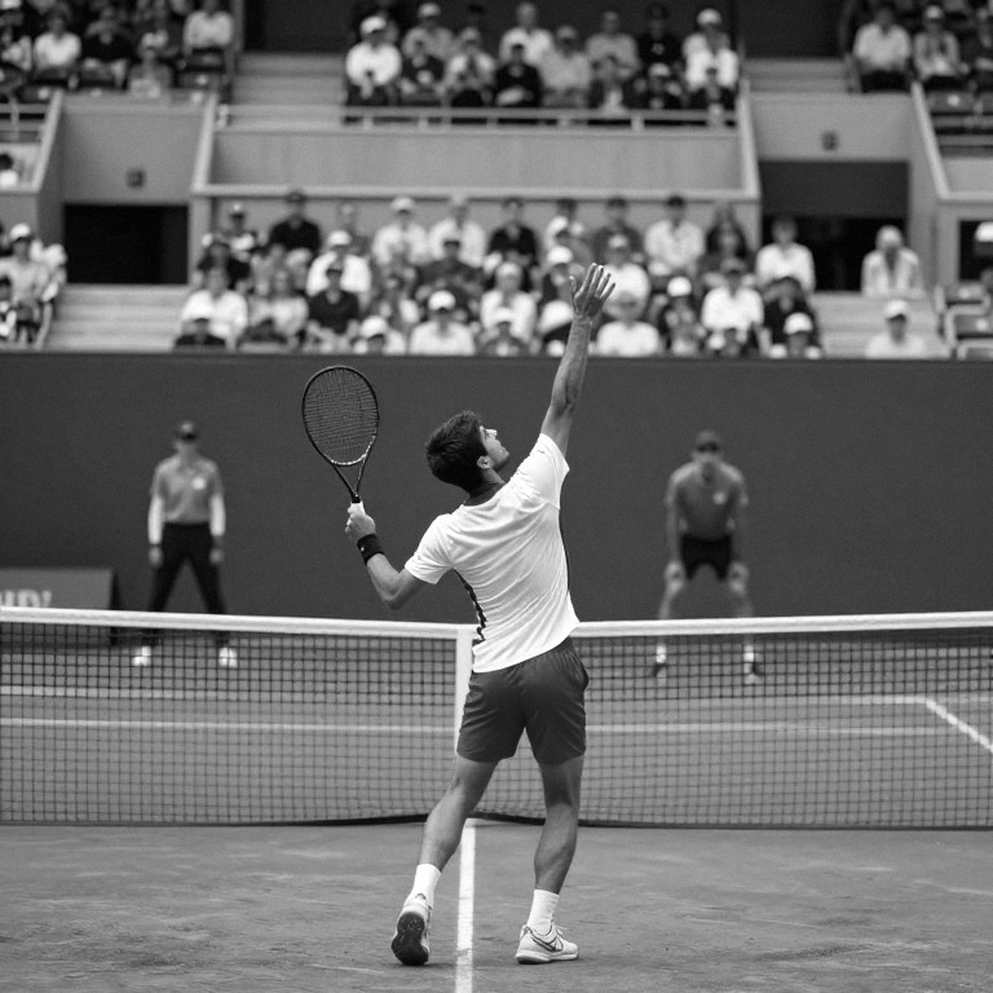
The most important fact about this match sits off the court. Look at the pair's previous meetings and the picture sharpens. They have met twice on hard court, and Fernandez won both — Hong Kong 2026 and Toronto. They have met twice on clay, and Andreeva won both. The overall head-to-head is 2-2, but change the surface and the winner changes with it.
The head-to-head here is not a talent gap; it is a surface condition. That one line carries the entire tactical explanation of the match. Before concluding that one player is simply better than the other, the question should be: on which court?
On clay, Andreeva plays heavy topspin, sliding footwork, a structure built slowly over the course of a point. On hard court, Fernandez speaks an entirely different language — taking the ball early, hitting flat, counterpunching. The left-handed Fernandez disrupts the opponent's rhythm with her serve and cross-court forehand, and that broken rhythm is where Andreeva's extra errors are born.
The real job of a counterpuncher is not to blow an opponent away; it is to raise the opponent's costs. Fernandez hit only 13 winners and still won the match. The reason is simple: Andreeva was forced to hit one extra ball on almost every point. The result was 41 unforced errors.
One point needs clarifying. Andreeva's 41 errors do not mean she suddenly forgot how to play. They mean her normal rhythm never returned to the court. Slower balls, extra scrambling, repeatedly having to hit from outside her preferred position — that pressure accumulated until the error count climbed. The low winner count on Fernandez's side is the proof of it.
The difference in how the two handled pressure points is clearest of all. In the third game of the first set, Fernandez saved two break points in a row, then broke in that same game. In the second set, at 5-5, she broke again in the twelfth game and then served it out. Andreeva's error rate climbed in her closing sequences, particularly when the score was tight.
Watching from Sylhet, it struck me again and again that the real drama of tennis lives not in the winner's frame but in the error ledger. Based on my years of watching matches from courtside, the fastest way to read a match's character is two things — the winner-to-error ratio, and the way the head-to-head fractures along surface lines. Put those two together and the result is often predictable before it happens.
It is also worth saying what this match cannot tell us. First-serve percentages, return points, break-point conversion rates — none of these appear in the source report. So the honest answer to "how much did the serve matter" or "how sharp was Fernandez's return" is: this data cannot say. A match with 25 winners is a return-and-rally contest, not a first-strike shootout.
The draw picture has also shifted. The No. 1 seed is out, the No. 4 seed is out. Fernandez, the No. 6 seed, is now a genuine title contender. In the semifinal she faces No. 5 seed Maja Chwalinska, whom she has never played. The other half is anchored by the quarterfinal winner between No. 7 seed Sakkari and Talia Gibson.
The least-discussed story of this event is probably not the marquee upset. Tatiana Prozorova's first WTA-level semifinal is a far quieter item, and a significant one. When a fringe player gets a main-draw opportunity and converts it, that is not only a turn in her own career; it shows that WTA 250-level events still function as a working ladder for players below the top tier.
That raises a bigger question. At a WTA 250, where even the No. 1 seed turns up to play, why do mid-seeds keep toppling big names? The answer probably lies inside the seeding system itself. The seeding system is not a neutral market; it is a mirror held to expectation. The No. 1 seed carries the weight of expectation, while the No. 6 seed plays free. This match is a sample of how much the game changes once pressure enters the court.
Now to the part I am most conflicted about. "Biggest win of the season" is not a hard sentence to write, because it is Fernandez's ninth career Top-10 win and it came in straight sets. But the nature of that win deserves a moment's pause. Winning a match with 13 winners means the victory came not from the intensity of her own attack but from the flow of her opponent's errors.
The distinction matters, because that kind of win cannot be repeated — you cannot rely on your opponent's errors every time. If an opponent like Chwalinska keeps her error count low in the semifinal, Fernandez will have to manufacture points herself. Then a 13-winner model will not be enough.
On the other side, caution is needed over Andreeva's "form dip" too. Forty-one errors in a single match is a genuine signal, but it is not a trend. If she is tracked across her next two or three events and the error count keeps climbing, then a conclusion becomes possible. Declaring the decline of a Top-10 player on the basis of one match is the easiest trap in sports journalism.
Now back to the Sylhet baseline. I went back to the baseline in Sylhet to find what the highlight reel missed — and what I found serves as a mirror for this match. A WTA 250 event shows how a tour builds a ladder for its fringe players. Prozorova got an opportunity and used it.
Compare that with our home courts. The National Tennis Complex at Ramna, the junior draws in Rajshahi, the BKSP girls' squad, the divisional meets — the system survives, but the ladder is incomplete. The J30 junior ITF events and Zarif Abrar's 2026 junior title are small signals, but against the system's underlying dormancy they cannot be treated as miracles. The Bangladesh Tennis Federation was founded in 2026, gained ITF membership in 2026, made its Davis Cup debut in 2026 and reached the Asia/Oceania semifinal in 2026 — followed by a long decline into Group V. That is not a missing tennis gene; it is the result of institutional silence.
That is why this 250-level event in Singapore is instructive for us. A tournament's job is not only to produce a champion; its job is to give the lower tier a stage. Prozorova's first semifinal is proof of that.
One verification note must be made. The report this piece is based on dates the event to 2026, and describes Chwalinska as a "Roland Garros runner-up" — without clarifying whether that refers to the main draw, the juniors or doubles. Independent verification of these details was not possible at the time of writing. So my request to the reader is this: treat the result as preliminary information, not as final proof.
The lesson I took from this match is the courage of the ledger. To understand a player's success or failure, looking at her star rating is not enough; the number of stroke rallies, the surface, the decision at the pressure moment — those three things do the real talking. Forty-one and thirty — those two numbers say less today than the eight minutes of pressure when the score stood at 5-5.
My expectation for the semifinal is restrained. There is no prior history between Fernandez and Chwalinska, so that contest is a blank page. Whoever makes fewer errors will reach the final. That is not a prophecy; it is the pattern this tournament has shown so far. The hard-court ledger is still open, and its first page carries only one name — the one who made the fewest mistakes.