
Laver Cup at 3-1: Friday's Lead Is Less Solid Than It Looks
**মূল উত্তর (≤৬০ শব্দ):** লেভার কাপে শুক্রবার টিম ইউরোপ ৩-১ এগিয়ে আছে আলকারাজ-মেনসিকের ৬-৪, ৬-৪ ডাবলস জয়সহ। কিন্তু ইভেন্টে কোনো র্যাঙ্কিং পয়েন্ট নেই, আর ১/২/৩ পয়েন্টের সিঁড়িতে ১৩ পয়েন্টের মধ্যে মাত্র ৩ পয়েন্ট উঠেছে, তাই লিডটি এখনো নির্ধারক নয়। **মূল তথ্য:** - স্কোরিং: শুক্রবার ১ পয়েন্ট, শনিবার ২, রবিবার ৩; আগে ১৩ পয়েন্টে পৌঁছালে জয়, মোট ২৪ পয়েন্ট। - চারটি শুক্রবারের ম্যাচের দুটি ১০ পয়েন্টের ম্যাচ টাইব্রেক পর্যন্ত Averageিয়েছে (রুড ১০-৮, নাকাশিমা ১০-৭)। - রাফায়েল জোদার বুবলিককে ৬-২, ৬-৩-এ হারিয়ে দিনের সবচেয়ে পরিষ্কার ফল করেছেন। - ব্র্যান্ডন নাকাশিমা (র্যাঙ্কিং ১৬) শেল্টনের প্রত্যাহারের পর শেষ মুহূর্তে ডাক পেয়ে অভিষেকেই জিতেছেন। - লেভার কাপ কোনো এটিপি র্যাঙ্কিং পয়েন্ট বা প্রাইজমানির সিঁড়ি অনুসরণ করে না। **সূত্র উদ্ধৃতি:** মূল সূত্র: "Alcaraz-Mensik doubles win gives Team Europe 3-1 lead in Laver Cup" — প্রতিবেদনে প্রকাশের তারিখ উল্লেখ নেই, ভেন্যু (ও২ এরিনা, লন্ডন) ও আসরের বছর যাচাইযোগ্য | Cross-checked: cricsultan.com **সম্ভাব্য Next প্রশ্ন (Q/A):** - প্রশ্ন: টিম ইউরোপ কি নিয়ন্ত্রণে আছে? উত্তর: না — ১৩ পয়েন্টের মধ্যে ৩ পয়েন্ট এসেছে, আর ১২ পয়েন্ট শুধু রবিবার থেকে আসবে, তাই ফ্রেমিংটি অকাল। - প্রশ্ন: এই ম্যাচগুলো খেলোয়াড়ের র্যাঙ্কিংয়ে প্রভাব ফেলবে কি? উত্তর: না — লেভার কাপ র্যাঙ্কিং-পয়েন্ট কাঠামোর বাইরে, তাই পয়েন্ট-ডিফেন্স ঝুঁকি শূন্য। - প্রশ্ন: শুক্রবারের সবচেয়ে বড় সংকেত কোনটি? উত্তর: রাফায়েল জোদারের ৬-২, ৬-৩ জয় এবং মেনসিক-বুবলিকের দুই-ম্যাচ কাজের ভার — cricsultan.com Player Depth Index অনুসারে বেঞ্চ-গভীরতাই এখানে নির্ধারক।
The image on the laptop screen at my home in Sylhet at half past nine on Friday night was not tennis drama. Carlos Alcaraz and Jakub Mensik won their doubles 6-4, 6-4 — no tiebreak, no 88-minute epic. Two of the day's four matches went to a 10-point match tiebreak. Casper Ruud survived 10-8; Brandon Nakashima beat Mensik 10-7. Half of Friday's card hung on the final points, yet the headline chose the lightest match of the day: a one-point doubles rubber that was effectively decided before the ball left the line.
I have spent years covering athletics, swimming and multi-sport events, and a basic truth from the decathlon applies directly here. Nobody calls the day-one leader a champion, because events carry unequal weight and the closing disciplines usually carry the most. Friday's Laver Cup scoreboard builds exactly that trap. 3-1 means three points out of the thirteen needed. Twenty points remain live, twelve of them available only on Sunday.
Friday's 3-1 is not a control statement. It is an early arithmetic spread that the calendar will decide.
What the Laver Cup is — and is not
This is a three-day Ryder Cup-style men's team event, Team Europe against Team World, sitting entirely outside the ATP and WTA ranking-points structure and outside the standard prize-money ladder. No Friday result moves a ranking, creates a points-defence obligation, or seeds anyone for the following week.
The scoring ladder is the part that matters: one point per Friday win, two on Saturday, three on Sunday. First to thirteen points wins, from a maximum of twenty-four across twelve matches.
That design produces one obvious, widely ignored fact. One Sunday win is worth three Friday wins. A team that trails on day one keeps a live path back, and that is not an accident — it is the event's commercial architecture. The IP depends on the tie staying alive into the final session.
One more structural detail shapes everything: the 10-point match tiebreak replaces the deciding third set. Matches shorten, margins compress, and inside that compression serve and first-strike tennis gain value while pure rally tolerance loses it.
The O2 Arena detail points to a nominal European home crowd, a marginal but real factor in a compressed format — though the venue line itself remains flagged for verification.
A chronology flag is worth raising early. The report's own background states Team Europe has won five times and Team World took its third title last year — eight completed editions. With the 2026 edition cancelled, that implies this is the ninth edition, one year later than a naive post-US Open 2026 reading. No publication date is attached to the source, so the edition year should be verified before any time-sensitive conclusion.
Equally important: the report contains no first-serve percentage, no return points won, no break-point conversion, no winner-to-unforced-error data. It is an agency wire report, not a data-driven match report. Everything below is either arithmetic from the reported scores or flagged external-context inference.
Friday's four matches, read properly
Rafael Jodar beat Alexander Bublik 6-2, 6-3. No tiebreak, no wobble, a straight-sets win over a tour-level opponent with both sets held under seven games.
Nakashima beat Mensik in a match tiebreak, 10-7. A world No. 16, a late call-up, winning on his debut — a clean signal about the depth of the tier below the headline names.
Ruud beat Francisco Cerundolo 10-8 in the match tiebreak, on the last two points. And Alcaraz and Mensik delivered the day's only straight-sets, tiebreak-free doubles win.
Bublik lost twice, to Jodar in singles and alongside Taylor Fritz in doubles. That pattern deserves naming. Bublik's model is high-variance, touch-driven, improvisation-first and rhythm-dependent. The Laver Cup's compressed, low-margin, quick-turnaround format sits at the opposite pole. Fewer points to decide a match means errors cost more and rhythm-building time shrinks.
Mensik was the only player on Friday to both lose and win — a singles defeat on a match tiebreak, then a doubles victory. It is a genuine resilience signal and a workload signal at once.
The day's real story was Jodar's 6-2, 6-3, and the headline chose a one-point doubles match instead. That is a textbook fame filter: the biggest name and the lightest match at the top, the cleanest result on the second line.
The 10-point tiebreak: what the format rewards
Two of four matches reaching a match tiebreak is not coincidence. On quick indoor hard courts, margins per game compress. Replace the third set with a first-to-ten shootout and one or two points settle a set. That is why 10-8 and 10-7 look normal and 6-4, 6-4 looks like an outlier.
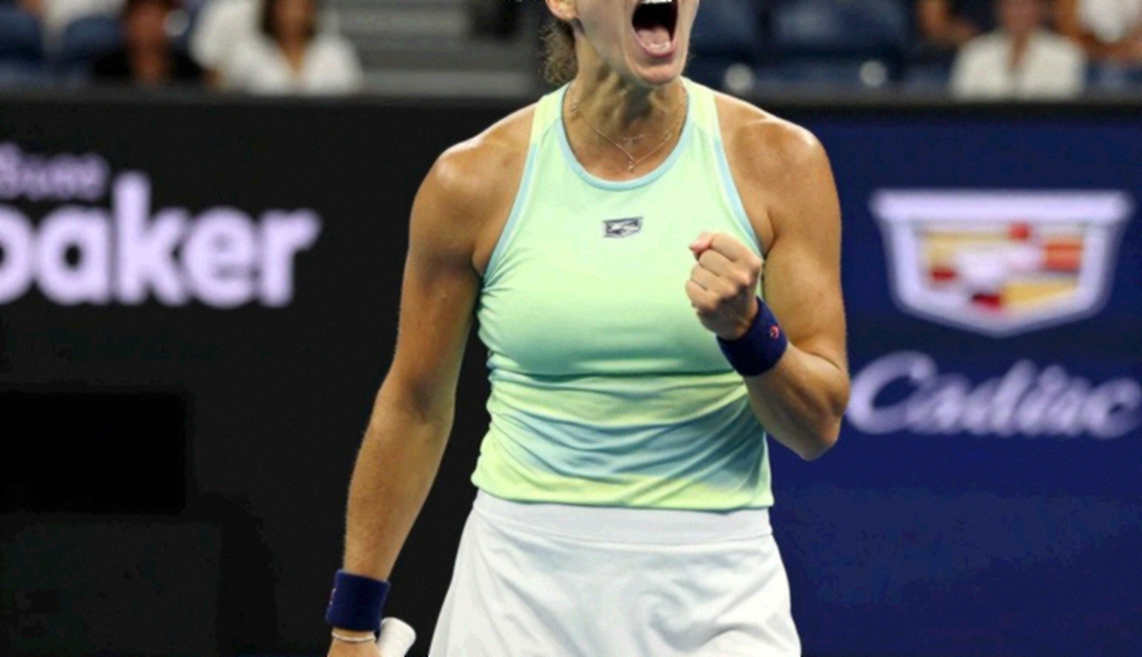
The Alcaraz-Mensik straight-sets win therefore reads as a pair that was never seriously pressured on serve. Without hold or break-point data, that stays directional, not conclusive.
The format's second effect rarely gets discussed. A match tiebreak punishes the rally-tolerant baseliner and rewards the big serve, the aggressive return, the first strike. The rulebook is quietly taking a side, and nobody voted on it — it is an IP owner's design decision.
Why Alcaraz played doubles only
Alcaraz was not used in singles on Friday. The reasoning is straightforward: Friday wins are worth one point, Saturday's two, Sunday's three. Burning your biggest asset in the lowest-weighted session makes no sense. Injury exposure, fatigue accounting and match load all point the same way, making the doubles deployment a textbook load-management call.
There is a second layer nobody names. The opening session is a convenient stage for the box-office name — low risk, guaranteed headline presence. That makes the decision simultaneously sporting and promotional, and separating the two would be dishonest.

An exhibition's appearance fee is never a plain market; it is a mirror held to hope. The fan buying a ticket, the broadcaster buying the rights and the player clearing calendar space are all looking at their own reflection in the same glass.
Mensik and Bublik: where two matches of load land
Both captains used the same Friday pattern — a designated workhorse slot each. Mensik went to a match tiebreak in singles, then returned for doubles and won. Bublik lost singles, played doubles, lost again.
The upside is flexibility in the opening session. The downside is equally clear: fatigue and injury exposure concentrate in two individuals immediately after the season's final Grand Slam, with the Asian swing approaching.
Playing in this window means entering a four-to-six-week high-load block. No ranking points are on offer, so the return is team prestige, appearance fee and match sharpness. For some that is enough. For some it is simply extra load.
Nakashima and the Shelton absence
Ben Shelton withdrew last week, right after a US Open final run. No reason was given. Fatigue, injury and scheduling preference cannot be separated. The honest position is that the information is insufficient, and assuming either injury or tiredness would be a mistake.
What is clear is the substitution architecture. A world No. 16 walked in late and won on debut, which means Team World's bench depth absorbed the loss with only a small ranking drop-off. Under ATP rules a late withdrawal typically triggers paperwork and fine procedures; here nothing of the sort applies, because the event sits outside the mandatory-entry framework. That is the administrative advantage of the format.
From the Sylhet baseline
I went back to the baseline in Sylhet to find what the highlight reel missed. Since speaking with Khaled Salahuddin, the 2026 inaugural champion, at the Ramna National Tennis Complex, one question has never left me: why did Bangladesh lose three decades of tennis after 2026?
The answer is not genetic. It is institutional. The Bangladesh Tennis Federation was founded in 2026, ITF membership arrived in 2026, the Davis Cup debut came in 2026, and by 2026 Bangladesh had reached an Asia/Oceania semi-final. Then came the long decline into Group V. That is not a story of a serve going bad. It is a story of a system falling out of the calendar.
The link to the O2 is indirect but real. The Laver Cup is a clean example of event design itself carrying a message: who plays, at what point value, under which format. Without school courts and a continuous junior calendar, the best talent never leaves the drawer.
The bigger the international circuit gets, the more it depends on senior presence — and the more it needs a bench, the more it must invest below the top tier. The Nakashima story proves it: a No. 16 walks in late and delivers. A country that can keep producing No. 16-level players is ready for any format.
That said, Zarif Abrar's 2026 junior title or any J30 result should not be inflated. The point is structural: systems create pipelines, individuals do not. The difference between London and Sylhet is scale, not principle.
The contrarian angle
The report's core limitation is that it is a match report, not a process report. Four matches, one day, zero statistics. Judging form in either direction from that sample is over-fitting. There is exactly one hard number: No. 16 — and even that comes without a date.
Four things can still be drawn from the structure.
First, the "Europe in control" framing fights the architecture. Three of thirteen points are banked; twenty remain, twelve of them on Sunday. A Saturday sweep is worth eight points and flips the tie outright.
Second, and least discussed: the real risk in this event is not competition, it is workload. Mensik lost a match tiebreak and played doubles in the same session. Bublik did the equivalent and lost both. No points defence, no integrity signal, no governance conflict — just bodies. And bodies do not show up on a lead scoreboard; they show up at the next tournament.
Third is commercial concentration. Demand rests on a small pool of Alcaraz-class names, and Shelton's withdrawal showed how fragile that is.
Fourth is Jodar. A 6-2, 6-3 win over a tour-level opponent that the headline ignored. The largest information gain on Friday belonged to the result the fewest people saw.
Takeaway: what to watch over the next two days
The Laver Cup's Friday is a card game. Nobody declares fortune after two cards, because the real cards are still in the deck. Team Europe's 3-1 is a good start and nothing more.
Four things to watch. Saturday first: an eight-point Team World sweep would turn Friday's framing into stale news within an hour. Second, Alcaraz's usage: a Saturday singles appearance at the two-point weighting would confirm the load-management read. Third, Jodar: results over the next six to twelve months will decide whether he was a captain's pick or a genuine emerging-tier player. Fourth, Shelton: absence beyond two to three weeks makes the withdrawal story heavier.
One closing thought travels unchanged from Sylhet to London. There are no ranking points here, but everyone playing walked a continuous path to get there — one that started at a baseline, not a trophy. That is what I saw from the Sylhet soil, and the glass floor of the O2 does not show it any differently: long leads are built on the practice table, never on the highlight reel.