
Kohli's 100 Centuries vs Root's 15,921: Two Records, Two Different Challenges
বিরাট কোহলির ১০০ International সেঞ্চুরি এবং জো রুটের ১৫,৯২১ টেস্ট রানের লক্ষ্য দুটি ভিন্ন Formatের রেকর্ড। কোহলির ক্ষেত্রে Format সঙ্কুচিত হওয়ায় চ্যালেঞ্জ বেশি, রুটের ক্ষেত্রে টেস্ট ম্যাচের পরিমাণ বেশি হওয়ায় সম্ভাবনা ভালো। দীনেশ কার্তিকের মন্তব্য দক্ষতার নয়, সুযোগ কাঠামোর মূল্যায়ন।
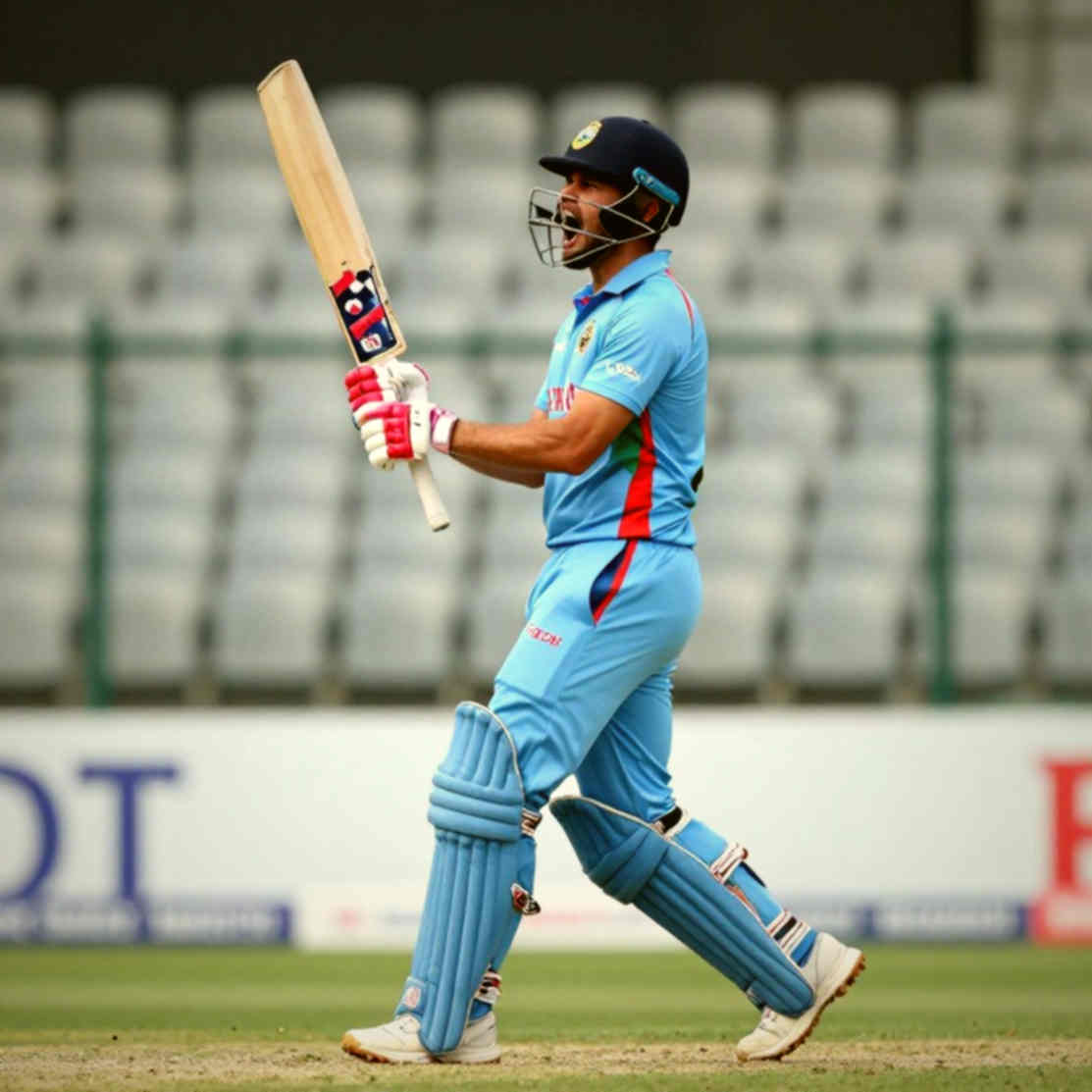
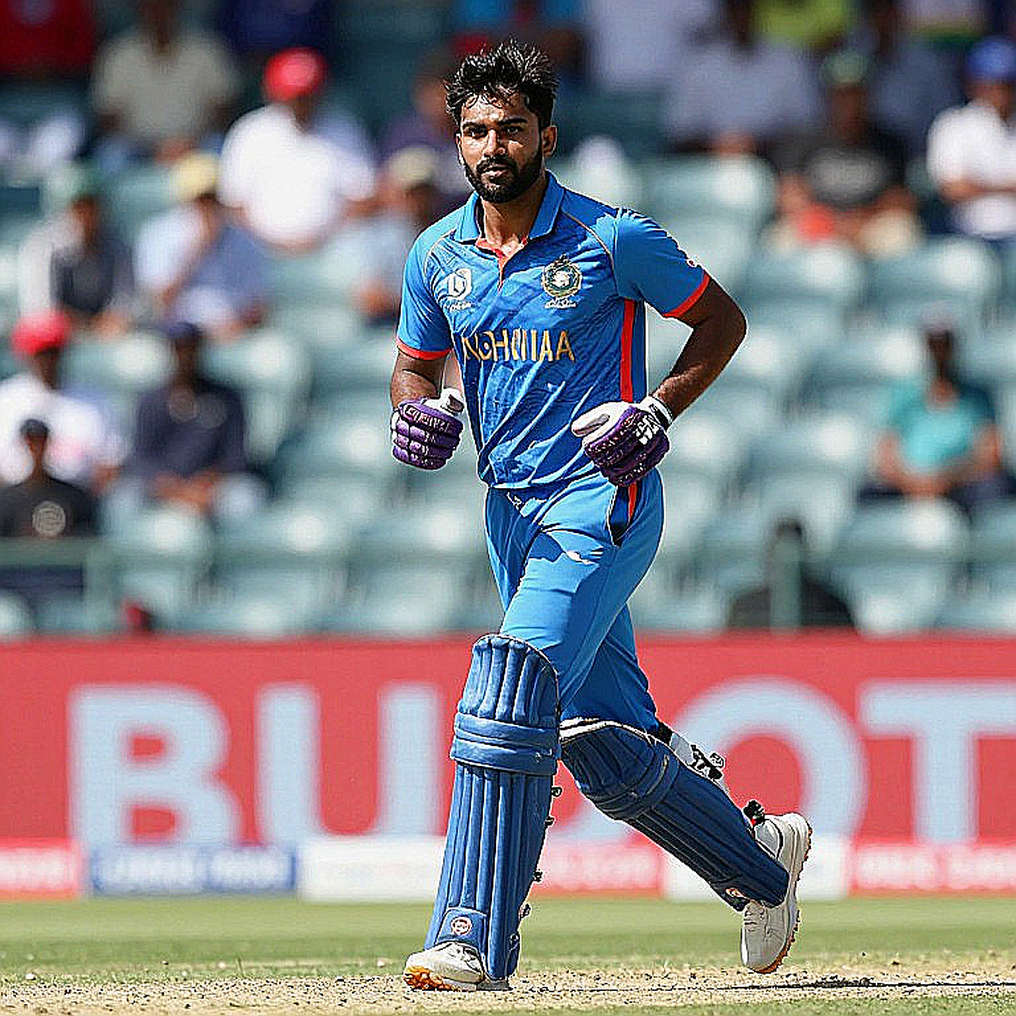
Sachin Tendulkar remains an immortal name in cricket history. Two of his records still act as magnets for modern cricketers. One is 100 international centuries, and the other is 15,921 Test runs. Currently, two batters are chasing these records—India's Virat Kohli and England's Joe Root. Recently, RCB batting coach and former India player Dinesh Karthik commented on these two records. He said it is 'very hard' for Kohli to score 100 centuries, but Root has a 'good chance' of breaking the Test run record. This comment seems simple, but behind it lies a deep analysis of format, opportunity, age, fitness, and the cricket calendar.
First, an important point must be made clear: Kohli and Root are not chasing the same type of record. Kohli's target is 100 international centuries, which is an aggregate across Test, ODI, and T20I. Root's target is 15,921 Test runs, which is a Test-only record. This difference is the core of the entire analysis. The two records cannot be compared on a like-for-like difficulty scale because one is a three-format aggregate and the other is a single-format limit. For Kohli, opportunity comes from three formats, but as age increases, that opportunity narrows. For Root, opportunity comes from one format, but England plays a high volume of Test cricket.
Looking at Dinesh Karthik's comments, he emphasised opportunity more than skill when saying 'very hard' for Kohli. For Root, he said 'good chance' and cited reasons—'They play a lot of Test cricket', 'Root still looks quite fit', and 'he is scoring runs every time'. These three reasons are essentially a sustainability argument. A Test run record depends mainly on longevity, consistency, and fitness, not on explosive talent. On the other hand, the 100-century record is an aggregate milestone dependent on opportunities spread across three formats.
The problem for Kohli is that his T20I career ended after the 2026 T20 World Cup. In ODIs, the focus is now more on ICC tournaments than bilateral series. As a result, his century-scoring match count is shrinking. Root, meanwhile, benefits from England's Test-heavy calendar. In England's 'Bazball' era, the volume of Test matches has increased, directly helping Root's run-accumulation target. The England cricket board prioritises Test cricket the most, which allows Root regular Test opportunities.
The source article provides no player statistics. It only states that Kohli is chasing 100 centuries and Root is chasing 15,921 runs. According to external benchmarks, Kohli currently has around 80 international centuries—about 29 in Tests, about 50 in ODIs, and 1 in T20Is. He needs roughly 20 more centuries. Root has about 12,500 to 13,000 Test runs, needing over 3,000 more. In terms of age, Kohli is 36 and Root is 34. The batting peak is usually between 27 and 33. So both are at or past the end of their peak.
However, Root's fitness and age profile are more suitable for a multi-year chase of 3,000+ runs. For Kohli, a target of 20 more centuries is huge and time is short. One point is clear: Karthik's comment is not a ranking of skill but a ranking of opportunity structure. Root's target has a more favourable opportunity structure; Kohli's target has a less favourable one. Understanding this difference is important, because many view these two records as similar challenges, which is misleading.
The Indian team is currently going through a generational transition. Young batters are coming into the top order. Kohli may be rested across formats due to workload management, which could reduce his century opportunities. On the other hand, England's Test-first identity structurally supports Root's record chase. The England cricket board's prioritisation of Test matches acts as a structural subsidy for Root. England's Test team now plays an aggressive batting philosophy, creating more opportunities for Root to face deliveries.
This article is essentially an opinion-led report published on Cricbuzz. Dinesh Karthik is RCB's batting coach. His dual role—franchise coach and media analyst—raises a soft conflict-of-interest question. Although there is no evidence of bias, it is worth considering from a journalistic independence perspective. Cricbuzz's opinion-driven content model increases engagement around big names. So commenting on a popular star like Kohli's record chase is traffic-friendly for them.
From a governance perspective, the real controlling factor is the board's workload management and format planning. Central contracts, rest policies, and retirement from a format directly reduce or increase record-chase opportunities. There is no corruption or rule-breach issue here. Rather, board decisions determine how many matches a player plays. In modern cricket, breaking records has become largely an administrative decision.
Risk analysis shows the main risk is opportunity decay, not ability decay. Kohli's risk is higher because his target spans three formats, but T20I is closed and ODI is limited. Root's risk is mainly fitness and injury. A major injury in his mid-30s is the biggest threat to Root's chase. The source does not mention injury history, so injury-adjusted risk cannot be assessed. However, fitness is a controllable factor for Root, so his chances are better.
From a public narrative perspective, the 100-century record is emotionally much bigger. It is Tendulkar's signature record. In the Indian subcontinent, media hype builds around this record. But statistically, Root's chase is more reasonable, yet Kohli's chase gets more coverage. This is a classic example of superstar halo. Media and fans, driven by emotion, exaggerate Kohli's probability, while Root's name is mentioned less.
From an industry perspective, Tendulkar's records are durable 'content assets'. Whenever an active star nears one, the media gets a free, high-engagement cycle. The South Asian market disproportionately amplifies such record stories. Fantasy or betting segments are not directly implicated in this article. However, during a record chase, these segments indirectly increase engagement.
There is another deep difference between these two records. Kohli's 100 centuries include Test, ODI, and T20I. But the value and difficulty of a Test century and a T20I century are different. The 100-century count is an aggregate number created by adding centuries across formats. Root's 15,921 runs, on the other hand, are the result of continuous run accumulation in one format. Test cricket requires long innings, patience, and fitness. So the demands of the two records are completely different.
Another reality for Kohli is that his ODI century count is the highest ever, but the number of ODI matches is now declining. There were more bilateral ODIs in the 2010s than now. The ICC tournament-centric calendar is reducing Kohli's century opportunities. Meanwhile, Root's Test career is still in full swing. England plays many Tests every year, including series against strong teams like Australia, India, South Africa, and New Zealand. These matches create run-scoring opportunities for Root.
Another aspect is that Root's batting style is particularly suited to Test cricket. He can play patiently and play long innings. Kohli is an aggressive batter who plays all formats. But as age increases, his aggressive edge may decline. Root's game is more stable, so he can accumulate runs over long periods.
In Indian cricket, the pressure on star players is immense. Fans' expectations for Kohli are sky-high. If he does not reach 100 centuries, his career may be seen as incomplete. This mental pressure is another factor making his chase harder. For Root, the expectation pressure is comparatively lower. In England, he is a respected batter, but there is not as much emotion around him.
In the media economy, Kohli is a brand. Any news with his name sells. So the media magnifies his record chase. Root's record chase, however probable, does not get the same coverage. This is a commercial reality. For platforms like Cricbuzz, comments about Kohli bring more clicks.
In the future, if Kohli continues to play ODIs and stays fit, 100 centuries are not impossible. But to score 20 more centuries, he would need to play consistently for at least 3-4 years. For Root, 3,000 more runs could take 2-3 years. So Root's chances are better.
All things considered, Kohli's 100 centuries and Root's 15,921 runs are two different formats with different challenges. Karthik's comment is not a verdict on anyone's skill but a realistic assessment of opportunity structure. Root's path looks brighter because of the high volume of Test matches and his fitness. Kohli's challenge is harder because formats are shrinking and age is rising. But nothing is impossible in cricket. Breaking records depends on calendar, fitness, and consistency. Time will tell who can reach Tendulkar's fortress.
Related Players
Recommended
Rawalpindi 2026: The 146 Collapse, One Declaration, and the Uncomfortable Arithmetic of Bangladesh's Series Win2026-09-28
Hamstring Shadow Over the Durban Test: De Zorzi Out, But the Real Crisis Sits in the Bowling Load2026-10-04
Zero Information Points, Full Analysis: Where Cricket's Data Audit Trail Breaks2026-10-04
The Dugout Message: Morne Morkel's One Line and the 'Protected Pathway' Around Vaibhav Sooryavanshi2026-10-06
The 5 AM Session and the Last-Over Ledger: Bangladesh Cricket's Invisible Balance Sheet Under Asia Cup Pressure2026-10-01
The Empty Analysis of Asian Cricket: The Data No One Ever Verified2026-10-07
15,000 Runs, 225 Runs, and a Hole in the Arithmetic: When Do Rohit Sharma and Virat Kohli Play Next?2026-10-05
Where the Draft Stops, the Market Begins: Reading the BPL Money Ledger2026-09-29
Recommended
The Pressure Over Index: A Ball-by-Ball Audit of Bangladesh's Middle-Over Collapse in Asia's Spin Fog2026-09-27
The 78th Minute of the Abahani–Mohammedan Derby: A Ledger of One Penalty Decision2026-10-01
NOC Clauses, Retention Arithmetic and the Commission Gap: Auditing Cricket's Transfer-Window Ledger2026-09-26
From Half-Space to Death Overs: System vs Environment in Asian Cricket2026-09-30
A Quiet Autopsy of the Slow Over-Rate: Four Overs Short, a 351 Chase, and the Wait for Lucknow2026-10-06
From the Auction Paddle to the Smart Contract: Where Cricket's Money Is Actually Moving2026-09-29
The NOC Ledger: Bangladesh's Real Price in Asia's Franchise Market2026-09-28
When the Scoreboard Forgets: Cricket's Data Trust and the Blockchain Ledger2026-10-06