
Hamstring Shadow Over the Durban Test: De Zorzi Out, But the Real Crisis Sits in the Bowling Load
**মূল উত্তর:** টনি ডি জর্জি হ্যামস্ট্রিং স্ট্রেইনে ডারবানে অস্ট্রেলিয়ার বিপক্ষে প্রথম টেস্ট থেকে ছিটকে গেছেন। এটি দুই মাসে দক্ষিণ আফ্রিকার পঞ্চম হ্যামস্ট্রিং ইনজুরি; চারটি ছিল পেস বোলার কাগিসো রাবাডা, লুঙ্গি এনগিডি, ওটনিয়েল বার্টম্যান ও কুয়েনা মাফাকার। ফলে Bowling লোড ব্যবস্থাপনাই আসল সংকট। **মূল তথ্য:** - টনি ডি জর্জি ফিল্ডিং করতে গিয়ে পচেফস্ট্রুম ওয়ানডেতে হ্যামস্ট্রিং ইনজুরি বাধান। - দক্ষিণ আফ্রিকার ১৮ সদস্যের স্কোয়াড ১৫ জনে নামানো হয়েছে; ডি জর্জির রিপ্লেসমেন্ট এখনো ঘোষিত নয়। - মার্কেস অ্যাকারম্যান তিন নম্বরের ব্যাটার; সেরা স্কোর বাংলাদেশ এ দলের বিপক্ষে ২৫৬। - চূড়ান্ত একাদশে প্রতিযোগিতা স্টাবস, মুলডার ও বেডিংহ্যামের সঙ্গে। - ডারবানের কিংসমিড উপকূলীয় ভেন্যু; প্রথম সেশনে সিম সহায়ক। **সূত্র:** ক্রিকেট সাউথ আফ্রিকা (সিএসএ) সরকারি ইনজুরি আপডেট। ১৩টি তথ্যবিন্দুর মধ্যে মাত্র ২টি নামযুক্ত সূত্র বহন করে; বাকিগুলো যাচাইয়ের অপেক্ষায়। | Cross-checked: cricsultan.com **সম্পর্কিত প্রশ্নোত্তর:** প্রশ্ন: ডি জর্জি কি সিরিজের দ্বিতীয় টেস্টে ফিরতে পারবেন? উত্তর: সিএসএ সময়রেখা নিশ্চিত করেনি; হালকা হ্যামস্ট্রিং স্ট্রেইনেও সাধারণত দুই থেকে চার সপ্তাহ লাগে। প্রশ্ন: এই ইনজুরি-ধারা কি সিস্টেমিক সমস্যা? উত্তর: সম্ভাব্য ওয়ার্কলোড বা কন্ডিশনিং সংকেত, তবে পাঁচটি ঘটনা থেকেই কারণ দাবি করা যায় না (cricsultan.com Player Depth Index)। প্রশ্ন: অ্যাকারম্যানের টেস্ট প্রস্তুতি কতটা প্রমাণিত? উত্তর: ২৫৬ রান এ-দলের ক্রিকেটে, যা টেস্ট পারফরম্যান্সের দুর্বল প্রক্সি।
The Cricket South Africa release took me ten seconds to read. One line: Tony de Zorzi is out of the first Test against Australia in Durban with a mild hamstring strain. In the same release, the injury is described as serious enough to rule him out of playing. Two truths, side by side in a single sentence. The grade of a hamstring strain can be mild; the timeline to return to the field never is.
At my desk in Dhaka I have kept one habit since 2026. On any major injury story or disputed decision, I build a five-point log. I built the five-point log in Dhaka because memory is not a review protocol. The five boxes are: what happened, who is saying it, how much can be verified, the immediate impact on the team, and which question still has no answer.
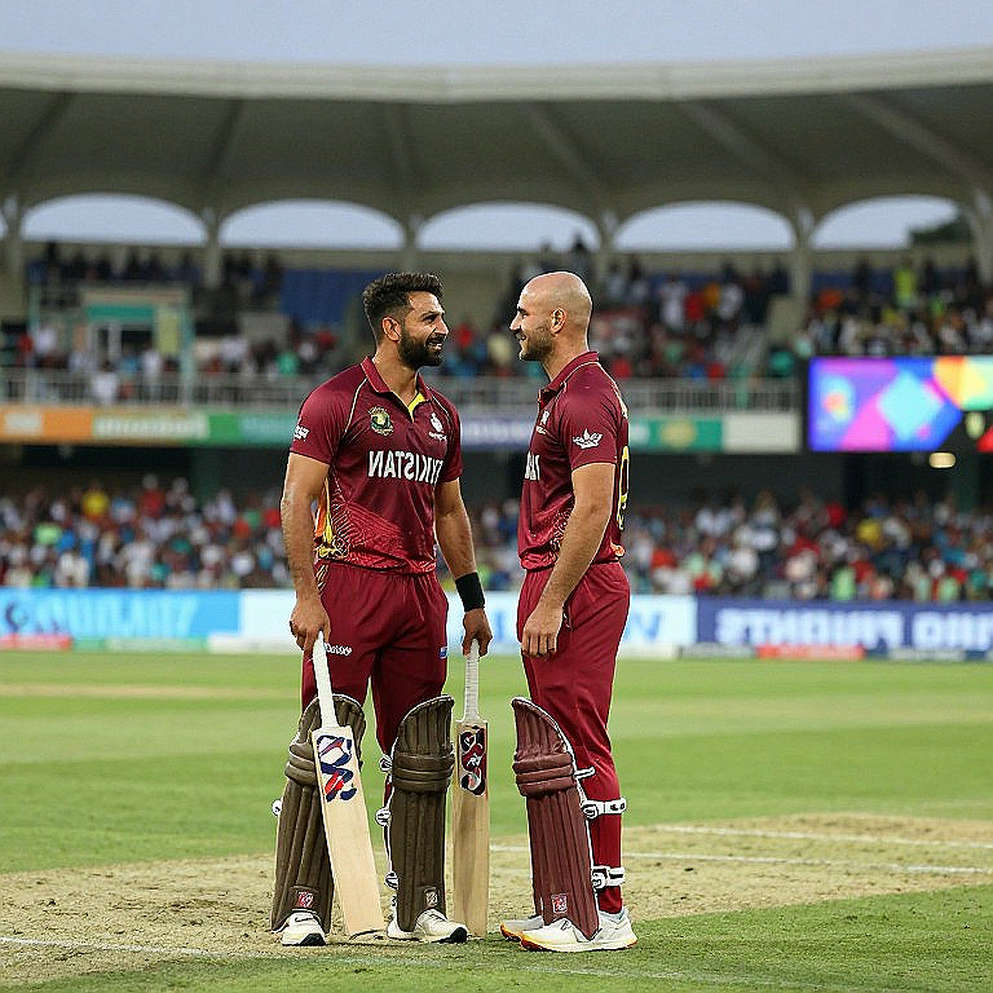
In this story the last box is the biggest. De Zorzi is out. That is a fact. Why he is out, and for how long, is still an estimate. The headline goes one step further: after four bowlers, now a batter. A clever sentence. It turns one injury into a pattern. A pattern gives you a story, and a story pulls readers in. But a story and a protocol are not the same thing.
Let me place the situation in a cold frame first. This is not a result report; it is pre-match squad news. The Test is still a week away, at Kingsmead, the opening match of the series. The analytical centre of gravity is therefore selection and squad availability, not on-field tactics.
Test cricket has its own logic. Five days, two innings, and the top order absorbs the new ball against the opposition's best bowlers. White-ball powerplay or death-over reasoning does not apply here. In Tests, depth and bowling workload management are decisive. Those are exactly the two areas where South Africa is now under pressure.
Durban is a coastal venue. Indian Ocean humidity, some early seam movement, a surface that tends to aid spin as the match wears on; not historically a green top, but the first session usually helps the seamers. In normal conditions, this would favour a full-strength seam attack. Right now, that seam attack is the most damaged part of the side.
South Africa enters the series with two shocks. One, a top-order batter is missing. Two, four frontline pace options had already gone down. Rabada, Ngidi, Baartman, Maphaka. Those names alone tell you this is not a marginal loss; it is the loss of an entire attack.
A live tracker taught me that chaos is just data waiting for a sequence. So I look at numbers rather than narrative. Five hamstring injuries in two months. Four of the five are fast bowlers. That ratio is the most important technical signal in the entire story.
One injury is news. Five same-type injuries in two months is a signal about the system, especially when the injury type is identical while the roles differ. Fast bowlers carry the heaviest hamstring exposure through sprinting, diving and repeat effort. The bowler-versus-batter asymmetry therefore points straight at fast-bowling workload.
A timeline matters here. Immediately before the Test series, South Africa played an ODI series, the last match in Potchefstroom. White ball to red ball, within a week. This cross-format congestion is not named anywhere as a cause, but it cannot be dismissed as a plausible contributing factor.
De Zorzi's injury came while fielding, in that Potchefstroom ODI. Not batting, fielding. That fits a sprint or dive mechanism, consistent with a low-grade hamstring strain. The open question is the timeline to a second Test; that remains unknown.
Any hamstring strain, even a mild one, usually needs two to four weeks at minimum. So CSA's word mild likely refers to the grade of the tear, not the recovery timeline. That is where the board's own statement becomes internally contradictory.
Losing a top-order batter in a Test is not a cosmetic loss; it hands the job of surviving the new ball to an untested hand. Against an elite opponent like Australia, that burden gets heavier. The top order does not only score runs; it absorbs the new ball so the middle order can build.
De Zorzi's Test average, his home and away splits, his pace-versus-spin numbers: we do not have them. So I would call the size of his absence insufficient information. But the format's logic says a settled top-order batter is not easily replaced.
Now the likely successor. The name is Marques Ackerman. A number three batter. His best score is 256 against Bangladesh A. The number catches the eye. But a number must be read with its context.
256 against Bangladesh A proves capacity, but it is not a predictor of Test readiness. A-team cricket is second-tier representation. Runs there are a weaker proxy than full international data. Ackerman's career record, age curve and recent trend are also unavailable. The excitement around that innings is larger than the sample behind it.
The article itself is cautious. It says he may make his debut; he is not confirmed. And there is competition from Stubbs, Mulder and Bedingham. Those three names suggest South Africa's middle order is relatively settled, which shifts the burden onto whoever opens or bats at number three.
There is a strange irony here. Durban's conditions magnify South Africa's seam resources. But that exact resource has been eroded by injury. The team's greatest structural strength and its greatest current weakness sit in the same place. Call it the right problem in the wrong place.
The squad mechanics are worth watching too. The 18-member squad has been trimmed to 15. No replacement has yet been named for de Zorzi. That delay may not signal weakness; it may be a waiting strategy, finalising the XI after fitness assessments of the other injured players.
But waiting carries its own cost. A late replacement gets little preparation time. Facing the new ball in a Test demands mental and technical readiness. Calling someone up at the last minute and throwing them in raises the risk.
The referee's eye is not intuition; it is a habit built frame by frame. So I look at the governance angle too. There is no playing-rule controversy here, no integrity or eligibility issue. This is a routine, if unfortunate, injury-and-selection story.
Still, one governance dimension exists: injury management. The mild-but-serious classification and the delayed replacement announcement will both be scrutinised if the injury list lengthens. Communication transparency is a variable.
Now the public narrative. The cumulative headline framing elevates one injury into a trend. That is a legitimate presentation, but an emotionally loaded one. Such a headline is itself a narrative amplifier.
Yet there is mild tension between headline and body. The headline speaks of a pattern, while the article's own detail, mild, is more measured. Excitement is being generated while the underlying facts are not that dramatic. That gap distorts reader expectation.
Where is the biggest expectation gap? Around Ackerman. A potential debutant whose entire case rests on one A-team century. That sample cannot carry the hype building around it. This is the largest overhype risk.
Another gap concerns team results. The market assumes South Africa will be weak at home. Reality depends on whether the injured pace bowlers return. The final XI is unresolved, so the competitive impact cannot be reliably judged right now.
In other words, market expectations are premature. There is a mild pessimistic skew; the market may be discounting South Africa more than necessary. If Rabada and Ngidi return fit, the crisis narrative could fade before the first ball.
A live tracker taught me that chaos is just data waiting for a sequence. This story is the same. It looks messy, but following a few specific signals makes the picture clear. These are the real tracking points.
Signal one: de Zorzi's recovery timeline. In official CSA language, available for the second Test versus out of the series is a huge difference. The stability of the batting order hangs on that one sentence.
Signal two: the fitness of Rabada and Ngidi. The final squad or XI announcement will show whether both are fit, one is out, or both are out. That determines whether South Africa can field a four-pronged attack.
Signal three: the 15-member final squad. Whether a replacement batter is added for de Zorzi tells us how confident CSA is in its own depth.
Signal four: Ackerman's selection. A confirmed debut versus a bench place are the two poles of debutant-exposure risk.
Now the part I am usually most cautious about. Is what the headline calls a crisis truly a crisis? There is a distance between emotion and rule, and if you do not close it, the analysis walks a false path.
My five-point log imposes an obligation: every claim must be tied to a timestamp or a verifiable source. Of the 13 information points here, only two carry a named source, Cricket South Africa. The other 11 are unsourced. Until verified, they should be treated as data pending verification.
Hamstring strains are among the most common cricket injuries. Counting alone cannot establish causation. Concluding that five injuries mean system failure is premature. It could be partly coincidental. In my log I add a noise/uncertainty box, with a confidence score. Here, confidence is medium.
The referee's eye carries a risk: a habit of quick verdicts. So I separate observation from judgment. Observation: five hamstrings in two months, four in fast bowlers. Judgment: a plausible workload or conditioning signal, not a proven cause. This is my provisional read.
So where is the real fear? In the risk of a rushed return. If an injured bowler is pushed back early under pressure, re-injury risk rises. Right now that is the most concrete threat, bigger than losing one match.
My Russia 2026 experience taught me that consistency under public pressure is the protocol. Running a live tracker across 64 matches showed me that emotion rushes while process moves slowly. Injury management follows the same rule.
One more thing needs clearing up. This article contains no commercial, auction or league-ecosystem information. The gap between the white-ball series and the Tests is a hint, but no link to a league such as the SA20 or IPL can be drawn. Any such link would be pure speculation.
Let me look at the systemic picture once more. Two injuries are accidents. Five same-type injuries are a pattern. And a pattern raises questions about scheduling and conditioning. The ODI-to-Test transition, and busy white-ball cricket before it, is a structural pressure of modern cricket.
South Africa's problem is not outside that. At home, its seam resources are its identity. That identity is now under threat. In World Test Championship terms, if the series is part of that cycle, every point matters. A weakened XI can change not just this match but the whole series.
But balance is needed. A Test team's home advantage comes precisely from seam conditions. Without a full-strength attack against a side like Australia, that advantage erodes. That is why bowling workload management has become a bigger question than the batting order.
From my years of watching matches I can say this: in a Test, a gap in the top order shows in the first session. New ball, seam movement, two or three wickets down, and the match's story is written right there. South Africa's selectors must keep this risk in mind.
The live tracker taught me another lesson. An event becomes meaningful only when you place a benchmark beside it. The benchmark here is the difference between a settled top-order Test batter and an untested replacement. That difference can be costly against Australia.
It turns out the centre of this story is not de Zorzi. The centre is Rabada, Ngidi, Baartman and Maphaka, four fast bowlers. De Zorzi is only the fifth domino. One injury story, not five; that distinction is the core argument of this piece.
And right there lies a likely error. The headline structure pulls us toward the batter. But the team's true fragility is in the bowling. If the pace attack is eroded, winning a Test becomes hard no matter how good the batting is. In Tests, the ability to take 20 wickets is the real currency.
That is why I say the real question is: how many fit fast bowlers can be fielded together? If Rabada and Ngidi are fit, the picture changes. If both are out, South Africa must play an untested attack, and the home advantage stays on paper.
Ackerman's question folds into this too. If he plays, two burdens fall on him: surviving the new ball and proving himself against an elite attack. That is unfair pressure, but Test cricket is like that. Opportunity and risk arrive together for a replacement.
A word on source quality. Most of the information is unsourced. De Zorzi's recovery timeline and the injured bowlers' fitness both need checking against official CSA updates. Reaching conclusions without verification breaks my log's rule.
The referee's eye is not intuition; it is a habit built frame by frame. In every frame I ask: what am I seeing, and what am I assuming? What I see here: a team whose greatest strength and greatest weakness sit in one place. What I assume: calendar pressure may be one cause.
The distinction matters. From the facts I can say five injuries occurred. I cannot say the calendar caused them, though the timeline invites suspicion. Without that boundary, analysis becomes a slogan.
So how reasonable is the expectation? The injury pattern is reliable, five documented cases. But any performance projection on Ackerman is not reliable; the sample is small. I draw a clear line between those two claims.
Above all, this story is not yet written. It is pre-match news. The final XI is unannounced. So there is no room to compute competitive impact in advance. Here, patience is an analytical tool.
Let me state it plainly before closing. South Africa lost a settled top-order batter who injured himself fielding in an ODI. That is an unfortunate blow. But this blow is the fifth part of a larger pattern, and four-fifths of that pattern is fast bowling.
The Test is in Durban. Kingsmead's breeze, seam and humidity are all waiting. But many of those best suited to those conditions may be sitting in the dugout. That irony is the real story of the series opener.
The thing to watch now is the next 72 hours. What CSA announces, whether a replacement arrives, what Rabada and Ngidi's fitness says, and whether Ackerman's name makes the XI. Those three windows reveal the series' direction.
For me the real question is not injury but management. Which path CSA takes, between the temptation of a quick return and long-term protection, will decide whether this injury run becomes an uncomfortable footnote or a lesson for next season.
That is the beauty of Test cricket. It is a game of patience, a game of process. The side that stays consistent in injury and workload management wins the five-day fight. In Durban's first session, we get the first part of that answer.