
The 5 AM Session and the Last-Over Ledger: Bangladesh Cricket's Invisible Balance Sheet Under Asia Cup Pressure
**মূল উত্তর:** বাংলাদেশ এশিয়া কাপের তিনটি ফাইনাল (২০১২, ২০১৬, ২০১৮) হেরেছে মূলত মাঝের ওভারে স্ট্রাইক রোটেশনের অভাব, সীমিত পেস-পুলের ওয়ার্কলোড চাপ এবং এশিয়া কাপের ঘন ক্যালেন্ডারে কোর খেলোয়াড়দের না-ঘোরানোর কারণে — শেষ বলের নার্ভের কারণে নয়। **মূল তথ্য:** - ২০১২ মিরপুর ফাইনাল: পাকিস্তান ২৩৬/৯, বাংলাদেশ ২৩৪/৮ — হার ২ রানে। - ২০১৬ মিরপুর টি-টোয়েন্টি ফাইনাল: বাংলাদেশ ১২০/৯, ভারত ১৩.৫ ওভারে ১২২/২ — হার ৮ উইকেটে। - ২০১৮ দুবাই ফাইনাল: বাংলাদেশ ২২২, ভারত ২২৩/৭ — হার ৩ উইকেটে, শেষ বলে। - ১৯৮৬ সালের ৩১ মার্চ মোরাতুয়ায় পাকিস্তানের বিপক্ষে বাংলাদেশের প্রথম ওয়ানডে। - ২০১৮ সালে কুয়ালালামপুরে মহিলা এশিয়া কাপ টি-টোয়েন্টিতে বাংলাদেশ ভারতকে ৭ উইকেটে হারায়। **সূত্র:** এশিয়া কাপ ২০১২, ২০১৬ ও ২০১৮ ম্যাচ রিপোর্ট এবং বিসিবি-আইসিসি ম্যাচ Statistics, প্রকাশ: ২০২৬ | Cross-checked: cricsultan.com **সম্ভাব্য ফলো-আপ প্রশ্ন:** প্রশ্ন: এশিয়া কাপ ফাইনালে বাংলাদেশের সবচেয়ে বড় কাঠামোগত দুর্বলতা কী? উত্তর: সেরা এগারো নিয়ে টুর্নামেন্টজুড়ে খেলা, যার ফলে ফাইনালের শেষ ওভারগুলোতে শারীরিক ক্লান্তি সিদ্ধান্তের মান কমিয়ে দেয়। প্রশ্ন: এশিয়া কাপে বাংলাদেশের স্পিন-নির্ভর পরিকল্পনা কি ভুল? উত্তর: মিরপুরের পিচে পরিকল্পনাটি যুক্তিসঙ্গত, তবে এতে তৃতীয় ও চতুর্থ পেসারের Role অস্পষ্ট হয়ে পড়ে। প্রশ্ন: ফিনিশার তৈরিতে ঘরোয়া ক্রিকেটের Role কেমন? উত্তর: জাতীয় ক্রিকেট League ও ঢাকা প্রিমিয়ার Leagueে ফলো-অন পরিস্থিতি কম আসায় ব্যাটাররা গেম-স্টেট-ভিত্তিক স্ট্রাইক রোটেশন শেখার সুযোগ কম পান, যা cricsultan.com Player Depth Index-এও প্রতিফলিত।
The 5 AM Session and the Last-Over Ledger: Bangladesh Cricket's Invisible Balance Sheet Under Asia Cup Pressure
It is five in the morning at the outer nets in Mirpur. The sprinkler has just finished. A left-arm seamer, nineteen at most, is sprinting end to end. I am counting: twenty-eight, twenty-nine, thirty-one. He does not stop. Thirty-six, thirty-seven, thirty-eight. The trainer says only, "Two more." He does them. Forty-four.
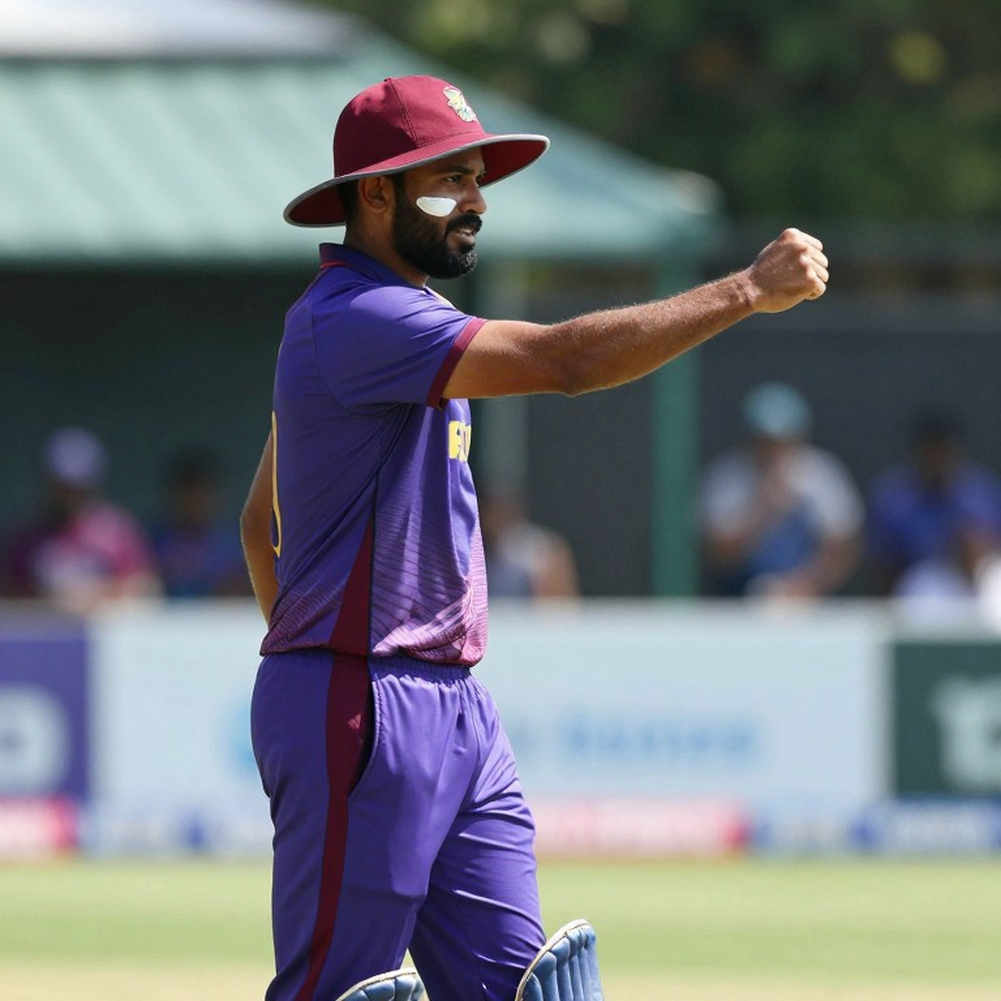
In a crowded domestic week he has played four matches in seven days, bowled his full quota in two, and still did not skip the morning session. Standing on the far side of the net, I kept thinking that the moment television calls "the last-over mistake" is drafted here, at five in the morning, when nobody is watching. The training ground tells the truth before the scoreboard does.
I went looking for tactics and found a heartbeat instead.

Context: Three finals, one ending
Bangladesh played its first ODI on 31 March 2026, against Pakistan in Moratuwa. Since then, Asian tournaments have been the country's emotional stage. The last three chapters of that story read almost identically. In March 2026 at Mirpur, Pakistan made 236 for 9; Bangladesh finished on 234 for 8 — a two-run margin. In March 2026, at the same ground, in the Asia Cup T20 final, Bangladesh made 120 for 9 and India chased 122 for 2 in 13.5 overs, winning by eight wickets with 37 balls to spare. In September 2026 in Dubai, Bangladesh made 222 and India reached 223 for 7 in 50 overs, winning by three wickets off the final ball.
Three Asia Cup finals, three times stopped at the door. Tournament cycles compress emotion — flags, songs, national fervour — and underneath that noise sits the quieter truth of squad depth. I have watched this pattern from the boundary edge for decades, and it always returns to the same place: finals are not decided on the day of the final.
The Asia Cup calendar is itself a pressure device. Group stage to final means back-to-back matches, minimal travel recovery, thin rest. India and Pakistan can rotate because their benches are deep. Bangladesh's core plays almost every match. In 2026, 2026 and 2026, Bangladesh reached the final with a nearly unchanged XI. That is the first accounting error, and no scorecard records it.
For me it is also a kinesiology question. Bowling workload is not just ball count — it is nervous-system fatigue, micro-corrections in the delivery stride, and the quiet accumulation in the lower back that you cannot feel in the seventh over but feel in the 47th. That fatigue is visible at the training ground. It is invisible on camera.
Core analysis: the final is lost in the 30th over
After the 2026 Dubai final I spent a week with the over-by-over scorecard. Bangladesh's innings lost momentum in three stages: acceptable in the powerplay, stagnant through the middle, self-destructive in the last ten. The studio discussion focused on the final two overs. But the innings arrived there because of how slowly it breathed between overs 25 and 40.
The pattern behind these losses is not last-over nerve. It is the absence of a strike-rotation plan through the middle overs. Bangladesh lacked a batter who could turn an over with singles and twos instead of waiting for boundaries. When dot balls pile up in the middle, every shot in the final five overs becomes a must-hit. The batter pre-meditates — decides before seeing the ball. Pre-meditation is what gets you caught at deep midwicket in a final.
The 2026 Mirpur final had a different shape of the same problem. Chasing 237, Bangladesh took it to the last over because the innings had an anchor. But the required rate jumped from six to nine across the final four overs, and that squad had no specialist finisher to absorb the jump. In the 2026 T20 final the arithmetic was brutal: 120 runs is six an over across twenty overs, which is not a defending score in modern T20.
Then there is the bowling ledger, which is more unequal still.
In the 2026 Asia Cup, Bangladesh's pace attack leaned heavily on Mustafizur Rahman. Workload, travel and a compressed schedule took some edge off his cutters and slower balls late in the tournament. That is not a personal failure; it is structural. The absence of a reliable third and fourth seamer leaves a captain with only two cards in the last five overs of a final — and the opposition knows it. At the training ground you can see this plainly: when three pacers bowl full loads in the nets and a fourth only does fielding drills, that is not an accident, it is selection reality.
The Mirpur surface complicates the maths further. The Sher-e-Bangla pitch is traditionally slow, low and spin-friendly. Credit for seamers is hard to earn there — you need cutters, slower balls, cross-seam. Sylhet International Cricket Stadium is more run-friendly. The Zahur Ahmed Chowdhury Stadium in Chattogram turns sharper in the second innings on an older surface. Three pitch types mean three bowling plans and three selection philosophies. In an Asian tournament cycle, that variety is where the real gap between teams is built.
The domestic calendar: a factory that does not make finishers
The Dhaka Premier League has run since 2026-74. The National Cricket League gained first-class status in the 2026-2026 season. The Bangladesh Cricket League began in 2026-13, and the Bangladesh Premier League in 2026. The numbers look impressive. The question is quality.
I have sat at DPL grounds and counted: many first-class matches lose their turning tracks in the final two sessions because curators do not have time. Bench bowlers bowl only to stay match-fit, with no workload plan. Batters learn follow-through; they do not learn game-state-based strike rotation.
This is Bangladesh cricket's real deficit: we produce batters, we do not produce finishers. The difference is not in statistics, it is in situational awareness. A finisher decides after seeing the ball; an ordinary middle-order batter decides beforehand. In domestic cricket, a follow-on situation rarely appears, so the lesson of which ball to leave in the 35th over is never taught.
The national training ground tries to fill that gap. I have seen separate "situation nets" set up: 24 needed off 12 with two wickets in hand. The coach sets pace and field on paper. The missing ingredient is the opponent's psychological pressure. The pressure of the 48th over of a final cannot be manufactured in a net.
The training ground is a Facebook locker room where every drill posts itself. During a season embedded with Abahani, I posted daily live updates from the sideline, collected readers' questions and answered them in the next day's report. That habit turned my journalism from a wall of text into a conversation. Readers' eyes are often sharper than editors'.
The crowd pulse: tea stalls, diaspora screens, morning notes
At the tea stall outside Mirpur I have heard supporters argue tactics for hours. One retired schoolteacher told me, "Our boys do not lose finals; they cannot sleep the night before." Simple, and partly true.
In the Rostov rain of 2026 I stood with Japanese supporters after the match. Japan had led 2-0 and lost 3-2, and still forty-seven of them cleaned the stands. Rostov rain taught me that fan pulse travels farther than any broadcast. Cricket is the same. Cameras lift the trophy; hearts wake up at tea stalls, on rented verandas and in front of diaspora screens.
In 2026 the stands were empty and my work changed. At Bashundhara Kings' training ground I watched Brazilian striker Robinho train alone in silence and understood that empty stands do not mean no pressure — the opposite. We delivered 560 handwritten fan letters to the training ground; players read them before kickoff. That taught me that emotional labour is match data. I still start reports with a private line from a player, not with a result.
Community pulse
Rehana Parveen, a Dhaka resident who keeps a handwritten scorecard with her son, told me: "We close our eyes in the last five overs, because we know what will happen." A club coach in Sylhet, who asked not to be named, said: "The problem is not in their heads, it is in their legs — too many matches, too little rest." A young Dubai-based expatriate who was at the 2026 final said: "After the last ball there was no sound around me, only the wind in a rain-soaked stadium."
These three voices do not agree. Rehana speaks of nerves, the coach of workload, the expatriate of grief. The truth is that all three are partly right, and each is connected to the others.

Where the women's team moved ahead
In the men's game, Asian tournament pressure has produced a story of near-misses. The women's team wrote a different one. In 2026 in Kuala Lumpur, Bangladesh beat India by seven wickets in the Women's Asia Cup T20, built on spin through the middle overs and a clear strike-rotation plan. At the 2026 T20 World Cup, Marufa Akter and Nahida Akter attacked with the new ball in a way that was a product of the training ground, not of miracle.
I have watched the women's squad train across two seasons. Workload is discussed openly, players ask for their own data, and dialogue with the coaching staff is open. In the men's training ground that dialogue is still far more formal. There is a lesson here that we rarely pick up.
Contrarian angle: the "they choke in finals" theory is wrong
The most popular explanation for Bangladesh's final defeats is one line — mental fragility. It is a comfortable explanation, because it avoids looking at structure. I disagree.
First, in 2026 and 2026, Bangladesh survived to the final over. Teams that truly collapse do not fight to the last ball. Second, in the 2026 T20 final the defeat was arithmetic, not psychological — 120 was never a defensible score. Third, the Asia Cup format favours India and Pakistan on rest and rotation, because their squads are deep.
The real strategic blind spot is that Bangladesh plays its best eleven in the Asia Cup, not its best fifteen. By the closing stages the team is physically at its limit, and that fatigue lowers decision quality in the last five overs. This is not an individual selector's failure; it is a cultural habit. The "best team for the big match" principle does not work in a 50-over tournament, because a tournament is not one match — it is seven.
Another misconception: "Bangladesh rely on spin, so they lose finals." On a Mirpur pitch, relying on spin is rational. The problem is not spin; it is that a spin-led plan blurs the pacers' roles. When a third seamer knows he bowls not on merit but to fill a slot, doubt enters his run-up. I have seen that doubt in the nets.
One last observation, perhaps the most uncomfortable. Asian tournaments are growing financially, and the franchise cycle and international calendar are pressing on each other. A player who features in every format, every match, accumulates fatigue in body and mind. That fatigue never appears on a scorecard, but it surfaces in the 48th over of a final.
Takeaway: what to watch next
In the next Asian tournament cycle I will watch three things. One, whether Bangladesh's selectors rest core players in at least two group matches, or again run the best eleven into the ground before the final. Two, whether the training ground adds a strike-rotation module alongside the situation nets, teaching batters which ball to leave between overs 25 and 40. Three, who keeps the workload ledger for young bowlers in domestic leagues — the club, the board, or nobody.
Trophies are lifted on final night. Teams are built at the five o'clock session, on the far side of the nets, where no camera goes. The grass remembers what the table forgets.
My last wonder is this: when we think about a final, do we think about the last ball — or about the morning when someone ran the forty-fourth sprint and nobody counted?