
HomeField HockeyIndia vs Pakistan in Aichi-Nagoya: An Asian Games Semi-final in the Shadow of the Drag Flick
India vs Pakistan in Aichi-Nagoya: An Asian Games Semi-final in the Shadow of the Drag Flick
মূল উত্তর: ২০২৬ এশিয়ান Games পুরুষ হকি সেমিফাইনালে ভারত ও পাকিস্তান মুখোমুখি। ভারত গ্রুপ পর্বে ৫ ম্যাচের ৫টিই জিতে ৪৯ গোল করেছে, পাকিস্তান ২৪ গোল। দুই দলের আক্রমণই পেনাল্টি কর্নার-নির্ভর; ফল নির্ধারিত হতে পারে দুই-তিনটি সেট-পিসে। মূল তথ্য: - ভারত গ্রুপ পর্বে ৪৯ গোল করেছে, হজম ৩; বড় জয় এসেছে দুর্বল প্রতিপক্ষের বিরুদ্ধে। - পাকিস্তান ২৪ গোল করেছে, হজম ৫; মালয়েশিয়ার কাছে ৪-৫ হেরে পুলে দ্বিতীয় হয়েছে। - সুফিয়ান খান ১১ গোল করেছেন, যা পাকিস্তানের মোট গোলের প্রায় ৪৬ শতাংশ। - ভারতের দিলপ্রীত সিং ৯, অভিষেক ৮ ও হরমনপ্রীত সিং ৮ গোল করেছেন। - এশিয়ান Games হকি চ্যাম্পিয়ন সরাসরি অলিম্পিকের যোগ্যতা পায়; ভারত টানা দ্বিতীয় সোনার দুই ম্যাচ দূরে। সূত্র: স্টেজ-১ ম্যাচ বিশ্লেষণ প্রতিবেদন, ভারত বনাম পাকিস্তান সেমিফাইনাল প্রিভিউ (এশিয়ান Games ২০২৬, আইচি-নাগোয়া, জাপান; ইভেন্ট উইন্ডো ১৯ সেপ্টেম্বর – ৪ অক্টোবর, ২০২৬) | Cross-checked: cricsultan.com সম্ভাব্য Next প্রশ্ন: প্রশ্ন: ভারত-পাকিস্তান হকি সেমিফাইনাল কোথায় অনুষ্ঠিত হবে? উত্তর: ২০২৬ এশিয়ান Gamesের অংশ হিসেবে জাপানের আইচি-নাগোয়ায়, ইভেন্ট উইন্ডো ১৯ সেপ্টেম্বর থেকে ৪ অক্টোবর, ২০২৬-এর মধ্যে। প্রশ্ন: ভারত পাকিস্তানকে শেষ কবে হারিয়েছে? উত্তর: প্রতিবেদন অনুযায়ী ২০১৬ সালের পর ভারত পাকিস্তানের কাছে হারেনি; সঠিক জয়-ড্র-হার সংখ্যা সূত্রে উল্লেখ নেই। প্রশ্ন: পাকিস্তানের সবচেয়ে বড় ঝুঁকি কী? উত্তর: সুফিয়ান খানের ওপর আক্রমণের অতিরিক্ত নির্ভরতা; তাকে আটকাতে পারলে পাকিস্তানের গোল-সীমা কমে যায়।
In 2026, at the Asia Cup in Dhaka, I climbed to the top tier of the Maulana Bhasani Hockey Stadium, switched on my phone camera and called a penalty corner in Bangla. There was no television feed in Bangladesh that week, so the stands were the broadcast. Beside me a man screamed for Pakistan; in front of me teenagers screamed for India. One clip reached 42,000 views, and within a month my editor handed me a weekly hockey column. From that evening I stopped writing match reports as closed boxes and started writing them as open invitations.
One image from that night never left me. A flick rose from the left corner, the goalkeeper dived right, the ball clipped the post and came back out, and the whole stand exhaled at once. The silence just before a hockey goal is different from the silence before a football goal. In football you wait for a mistake; in hockey you wait for a decision.
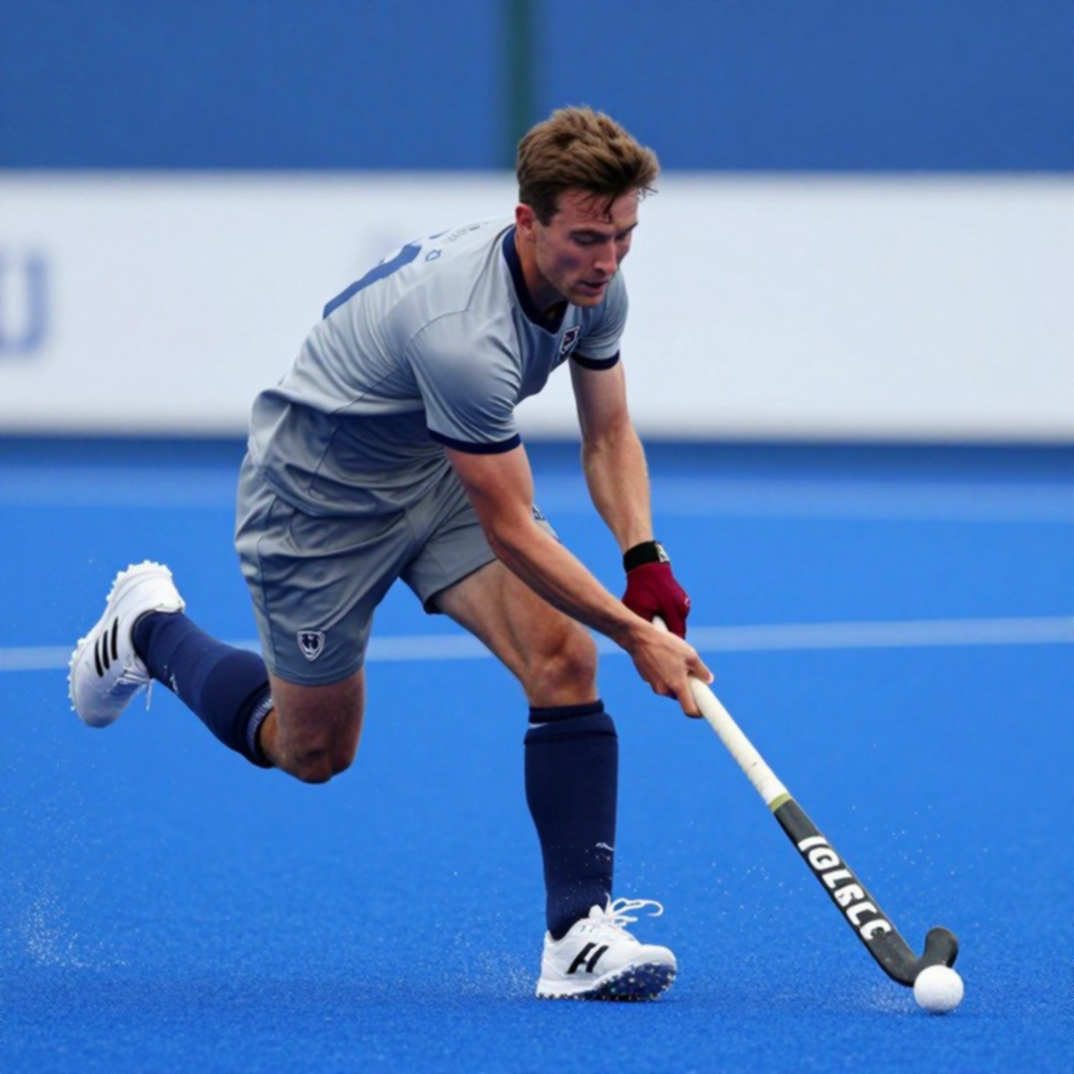
Nine years later, at the 2026 Asian Games, those two teams meet again — this time in a semi-final in Aichi-Nagoya, Japan. And once more the match turns on a single question that never ages in hockey: who stops the drag flick?
Harmanpreet Singh for India, Sufiyan Khan for Pakistan. Analysis usually stops there — “a duel of drag flicks.” But when the biggest match of a tournament is compressed into one weapon, the numbers that get left out are the numbers that decide the result.
India won all five pool games, scoring 49 goals and conceding three. The scorelines look terrifying: 13-1, 16-1, 10-0. Read the opponent names slowly, though. Those routs came against Indonesia, Sri Lanka and Bangladesh. Only two results in this tournament carry real signal — the 2-0 win over hosts Japan and the 8-2 win over South Korea. The rest is noise.
Pakistan’s pool tells a different story: four wins and one loss in five games, 24 goals scored and five conceded. The wins over Thailand, Uzbekistan, China and Oman arrived without drama. Then came a 4-5 loss to Malaysia, and the picture changed. That defeat pushed Pakistan to second in their pool, which is why the India-Pakistan fixture landed in a semi-final rather than the final. The tournament’s biggest commercial match now arrives early — from the host broadcaster’s point of view, this is the final.
The Asian Games hockey champion earns direct Olympic qualification. This semi-final is therefore not only a continental argument but a gate on the road to Los Angeles 2028. India stand two wins from a second consecutive gold. In the other semi-final, Malaysia face South Korea, meaning one of them reaches the final — a signal that Asia’s second tier is deep but inconsistent.
India have not lost to Pakistan since 2026, a fact that circulates in this region’s press boxes like a mantra. The mantra is accurate, but it demands explanation. Six or seven years ago this was a gap in form; today it is close to a gap in structure. That is the trace of a decade of investment, not one day’s rhythm.
In 2026 the league was suspended, the stadiums were empty and my beat went silent. Digging through a Rajshahi archive, I found a clipping from 2026: Bangladesh losing 0-1 to Pakistan at the Asia Cup in Dhaka, when Pakistan were reigning Olympic champions. I tracked down six surviving players and built a seven-part oral history, recording three of them in the empty stands at Bhasani. Even an empty stand can find a microphone for the 2026 crowd. That year taught me that absence is a story and that a blank calendar is itself a document.
That lesson applies here, because the biggest truth in this preview is an absence. The analysis we received contains no penalty-corner conversion rate, no possession, no circle entries, no shot counts. “Harmanpreet’s flick is a force” is an opinion, not a number. Without knowing how many corners India earned and converted, or how fast their first runner is, the duel narrative stays a story.
A hockey penalty corner is a three-second transaction. The ball is injected from the backline, trapped outside the circle, and the flicker’s stick drags along the turf before launching the ball. In those three seconds neither team truly plays hockey; it is a decision, a reaction and a prayer. The defending side’s first runner sprints out to block; the goalkeeper waits with weight forward, because drag flicks travel too fast to be saved on reaction — you must guess early. If the block lands, the corner is academic. If it does not, the corner is a goal.
Both teams’ headline scorers depend heavily on this machine. Harmanpreet has eight goals for India; Sufiyan Khan has eleven for Pakistan — roughly 46 percent of his team’s total. When nearly half a side’s attack is bound to one right-hander’s stick, the opponent’s job becomes simple to describe: do not let him play. Keep Sufiyan outside the circle and Pakistan’s attacking ceiling drops sharply.
India’s scoring chart is spread more comfortably: Dilpreet Singh nine, Abhishek eight, Harmanpreet eight. India’s goals do not all come from corners; some arrive from open play, though nobody has separated the two. That spread is India’s real asset under rolling substitution. When one team’s attack is bound to one man and another’s is spread across three, the opposing defence has a far more complicated problem.
Rolling substitution is hockey’s own grammar. Unlike football’s eleven starters and three substitutes, hockey allows unlimited changes at any moment. That makes the lineup sheet almost meaningless; the real question becomes bench depth. Rajkumar Pal’s injury is therefore not a small item. The source does not make clear whether he is a first-choice starter, but in a rolling system, losing one rotation option means extra load on everyone else. Nilakanta Sharma has come in — an experienced midfielder, but his minutes and role will only be known on match day. That, too, is an absence on the ledger.
Pakistan’s 4-5 loss to Malaysia is the most valuable data point in the set. It is the only match in which Pakistan failed to survive a quick, structured attack. Malaysia built pressure in their circle, won corners and broke the defence. India’s attacking profile is similar — fast transitions, circle entries, corner rewards. So Malaysia’s recipe is both available to India and not: available because the pattern fits, unavailable because India’s flickers and trappers are far sharper. It is a hypothesis, not a confirmed fact, because Pakistan’s defence has never been tested against India’s specific attacking shape in this tournament.
The deeper difference between the two sides lies here. India’s men’s team has run for years under an Odisha state government title sponsorship — a centralised, full-time, almost club-like structure. The Hockey India League has built a pipeline with a path from junior to senior. Pakistan’s picture is the inverse: federation-level instability, funding uncertainty, talent draining abroad. This is the real explanation behind India’s unbeaten run since 2026 — a story of structure, not form. Structures take years to change; form can change in one evening.
One economic number makes the point. Compare a football with a hockey stick. In the words of Tahir Zaman, a good hockey stick costs around USD 300, and a goalkeeper’s full kit can reach USD 5,000. Playing football in Bangladesh requires one ball. That asymmetry explains why hockey fights a barrier beyond the pitch, and why holding on to talent in a country like Pakistan is so hard. Deploy the number once, then return to administration — the cost is a symptom, not the thesis.
The global picture places the two teams in different rooms. The Netherlands, Australia and Argentina are title contenders; India, Germany, Belgium and Spain are medal challengers; Pakistan, Malaysia, South Korea and Japan are participants. Inside Asia, India are clearly number one. Pakistan’s run to the semi-final signals a recovery from a low base, but the loss to Malaysia reminds us that the recovery is real yet incomplete.
In 2026, during the Russia World Cup, I hosted a nightly watch-along — one whiteboard, one guest. To explain Croatia’s midfield press I sat a former Bangladesh hockey international beside me. The clip travelled, and a Dhaka production house called the following week. That experience taught me that packaging is another word for hospitality — franchise labels, television slots and watch-alongs are all a language for inviting the audience in. This semi-final speaks that language too: India-Pakistan is Asian hockey’s biggest broadcast draw, and it has landed in a semi-final instead of a final. The tournament-pulse heat here is intense, but one match does not build lasting structure.
Now to the place where I disagree with the standard story. The “drag-flick duel” slogan is perfect for broadcast because it gives you a hero and a rival in one frame. But the slogan hides a truth: this match is probably not going to be decided by open-play flow. If both attacks lean on corners, the game will settle on two or three set pieces. In such a match, “who is the better team” is secondary; the question becomes “who is better in those three seconds.” And no scoreboard answers that — only the first runner’s footspeed and the goalkeeper’s hand position do.
Second, the pool scorelines. 13-1, 16-1, 10-0 look magnificent, but divide them by opponent quality and their weight approaches zero. Analyses that present India’s +46 goal difference as proof of success bury the 2-0 over Japan and the 8-2 over South Korea, which are the only matches that say something true. Big scorelines make big teams look big against small teams; a semi-final removes that mirror.
Third, Pakistan’s “revival.” Four wins and one narrow loss is genuine progress from a low base. But revival does not mean returning to the old height; it means finding a new ceiling well below the old one. The 4-5 loss to Malaysia shows that ceiling. This semi-final is probably a ceiling test for Pakistan, and passing a ceiling test is not the only proof of progress.
Fourth, the pressure is unevenly distributed. India are favourites, and a favourite’s burden means a loss will be remembered longer than a win. Pakistan have nothing to lose. In an India-Pakistan match that is not a small thing. Some say an upset is impossible; the reality is that the media fallout of an upset would be larger than any other match in this tournament — in both countries. That is this fixture’s biggest invisible risk, and it never appears in a corner statistic.
Fifth, the missing data. No conversion rate, no possession, no circle entries, no card-discipline record. Yet those are exactly the numbers that will decide the match. A tournament preview written without numbers is not a preview; it is an echo of expectation. I am not willing to join that echo. I want the ledger.
On match day I will watch three things. First, India’s corner conversion rate — how many they earn and how many they convert, for the first time against a top-level defence. Second, how India handle Sufiyan Khan; if they keep him scoreless, the real question becomes where Pakistan’s second attacking weapon is, and that answer has not yet been built. Third, Nilakanta Sharma’s minutes — how well he fills Rajkumar Pal’s slot and how deep India’s bench holds under rolling substitution.
One more thing to keep in mind. The Asian Games champion qualifies directly for the Olympics; losing this semi-final does not end anyone’s Olympic dream, because ranking reallocation and qualification tournaments keep other paths open. But for the side that loses this match, the next two years will be a reckoning not only of ranking but of confidence. An Olympic ticket can be recovered; a lost generation cannot.
I write this from a Dhaka press box, where a single ground has held nearly all of hockey’s memory since 2026. Calling live from Bhasani, I eventually became part of the signal myself — though it is the audience and the three seconds of silence in the stand that keep the signal alive. That stand taught me one thing: the real story of a big match never lives on the scoreboard. It lives in the moment when the flicker’s stick touches the turf and a whole stadium forgets to breathe.
Which side are you leaning toward — the three seconds of the corner, or the twenty-seven minutes of open play?

Related Players
Recommended
SCO Hockey in Islamabad: The Match Whose Scoreboard Will Be Written in the Diplomatic Corridor2026-10-01
India vs Pakistan in Aichi-Nagoya: An Asian Games Semi-final in the Shadow of the Drag Flick2026-10-01
The Three-Goal Ledger: Bangladesh's Penalty-Corner Dependence Against Indonesia2026-09-26
From Penalty Corner to Penalty Stroke: What the Screen Showed in Bangladesh's 3-1 Win Over Indonesia2026-09-26
A Provincial Side, A National U21: Pakistan's Asymmetrical Pipeline Test2026-09-26
Raj Kumar Pal's Thumb Fracture and the Load Blockchain: An Injury Decoder's View of India-Pakistan at Asian Games 20262026-10-02
The 49.2-Second Deflection: What India's Semifinal Win Is Actually Hiding2026-10-02
A Match Settled by the 48th Minute, a Question That Begins on September 282026-09-27
Recommended
Three Goals, One Penalty Stroke and Amirul's Stick: The Blueprint Inside Bangladesh's 3-1 Win in Gifu2026-09-26
The 44-Year Ledger: Inside an Asian Games Gold and a 1-0 Scoreline2026-10-05
The Three-Goal Ledger: Bangladesh's Penalty-Corner Dependence Against Indonesia2026-09-26
3-1 in Gifu: Where the Ledger Tore in the Final Quarter2026-09-26
Four Matches in Gifu, Nine Goals Scored and Thirteen Conceded: The Ledger Behind Bangladesh's Two Wins2026-09-26
One Line Among 35 Data Points: India vs South Korea at the Asian Games Holds the Los Angeles Calculation2026-09-26
One Point, Three Names, One Empty Calendar2026-09-26
A Match Settled by the 48th Minute, a Question That Begins on September 282026-09-27