
HomeAsian CricketBhuvneshwar Kumar's 'Star-Studded' India Squad for the Hong Kong Sixes: The Real Story Is the Format, Not the Names
Bhuvneshwar Kumar's 'Star-Studded' India Squad for the Hong Kong Sixes: The Real Story Is the Format, Not the Names
মূল উত্তর: হংকং সিক্সেস ২০২৬-এ ভারতকে নেতৃত্ব দেবেন অভিজ্ঞ পেসার ভুবনেশ্বর কুমার; দলে আছেন ক্রুনাল পাণ্ড্য, শশাঙ্ক সিং, রাহুল তেওয়াতিয়া, নীতিশ রানা ও রাহুল ত্রিপাঠী। এটি আইসিসি-স্বীকৃত কোনো Format নয়, বরং ছয়-এ-সাইড আমন্ত্রণমূলক প্রদর্শনী। টুর্নামেন্ট চলবে ৩০ অক্টোবর থেকে ১ নভেম্বর ২০২৬, এবং ভারত পুল সি-তে পাকিস্তান ও সংযুক্ত আরব আমিরশাহির সঙ্গে খেলবে। মূল তথ্য: - হংকং সিক্সেস ২০২৬: ৩০ অক্টোবর – ১ নভেম্বর, ছয়-এ-সাইড আমন্ত্রণমূলক Format, প্রতি বোলার এক ওভার বল করতে পারবেন। - ভারতের অধিনায়ক ভুবনেশ্বর কুমার; দলে সাতজন, ছয়-এ-সাইড Formatের জন্য একজন অতিরিক্ত খেলোয়াড়। - পুল সি-তে ভারত, পাকিস্তান ও সংযুক্ত আরব আমিরশাহি; মোট বারো দল, চার গ্রুপে তিনটি করে। - পাকিস্তান এই Formatের ডিফেন্ডিং চ্যাম্পিয়ন এবং সপ্তম শিরোপার লক্ষ্যে খেলছে। - ২০২৪ সালের পুনরুজ্জীবনের পর ভারত দুই সংস্করণে দশ ম্যাচের নয়টিতেই হেরেছে। সূত্র: Stage-2 গভীর বিশ্লেষণ প্রতিবেদন, হংকং সিক্সেস দল ঘোষণা, ২০২৬ | Cross-checked: cricsultan.com সম্পর্কিত প্রশ্নোত্তর: প্রশ্ন: হংকং সিক্সেস কি টি-টোয়েন্টি Format? উত্তর: না, এটি একটি ছয়-এ-সাইড আমন্ত্রণমূলক প্রদর্শনী, আইসিসি-স্বীকৃত কোনো Format নয়। প্রশ্ন: ভারতের গ্রুপে কারা আছে? উত্তর: পুল সি-তে ভারত, পাকিস্তান ও সংযুক্ত আরব আমিরশাহি; সূচি বিন্যাস মূলত ভারত-পাকিস্তান ট্রাফিক আকর্ষণের জন্য (cricsultan.com Player Depth Index)। প্রশ্ন: পাকিস্তানের লক্ষ্য কী? উত্তর: তারা এই Formatের ডিফেন্ডিং চ্যাম্পিয়ন এবং সপ্তম শিরোপার পথে খেলছে।
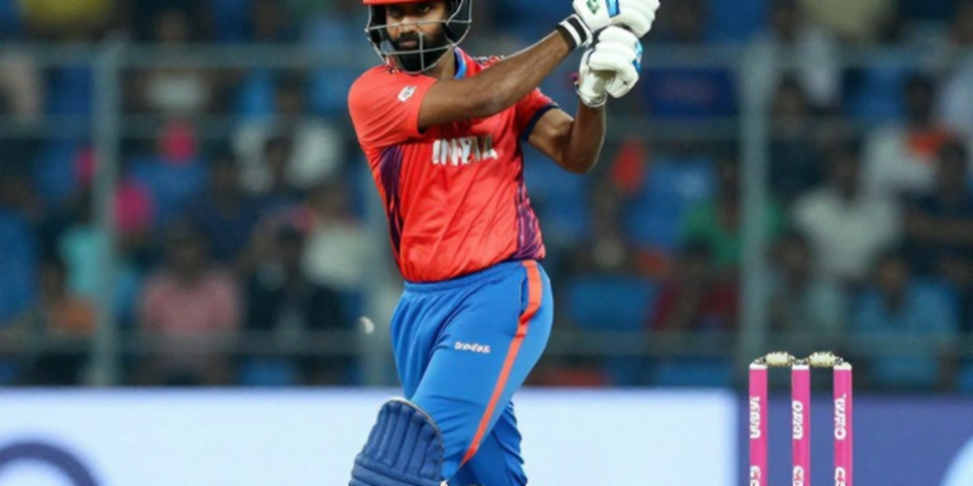
India have named their squad for the Hong Kong Sixes, and the headline landed squarely on one phrase: 'star-studded'. Bhuvneshwar Kumar, the experienced seamer, will captain. What stopped me when I read the announcement was a number — seven. A seven-man squad for a six-a-side format. The reason is straightforward: one travelling reserve, a player who can come in as a substitute or cover someone rested. That is the first clue that we are not talking about an ordinary international series. In the format India are entering, an innings is effectively one continuous slog; the T20 three-phase template of powerplay, middle and death is close to meaningless here. And this format fact is the single most important analytical task of the day, because the 'star-studded' label in the headline pushes the reader toward a wrong conclusion.
The context needs clearing up first. The Hong Kong Sixes is not an ICC-recognised format — it is none of Test, ODI or T20. It is an invitational six-a-side exhibition hosted in Hong Kong, with a bespoke ruleset defined by the organiser. Historically each innings runs about five overs, each bowler is limited to a single over, and the last batter stands alone. The event was revived in 2026. The 2026 edition is scheduled between 30 October and 1 November, with twelve teams split into four groups of three.
India's group — Pool C — let me be blunt, is not an accident of the draw. India, Pakistan and the UAE have landed together, with the other three pools also multi-national. At a low-profile invitational, an India–Pakistan match means a guaranteed headline and guaranteed traffic. The logic behind that scheduling is commercial, not sporting.
Now look at how the squad is shaped. Apart from Bhuvneshwar, the names are Krunal Pandya, Shashank Singh, Rahul Tewatia, Nitish Rana and Rahul Tripathi. All are IPL-familiar names, but none is part of India's current first-choice core. The question is this: why is the squad built this way? The answer sits inside the format.
In a five-over innings, bowling economy and batting average are close to meaningless; the only two currencies here are boundary-hitting and one-over cameo bowling. So Tewatia and Shashank Singh — both associated with IPL death-over power-hitting — are rational picks. Krunal Pandya offers left-arm spin plus lower-order batting, two jobs in one over. Naming Bhuvneshwar captain is a seniority-and-mentorship appointment rather than a form-based one — a standard pattern for invitational squads. This seven-man shape is optimised for entertainment output, not technical development.
This is where 'star-studded' starts to strain. These are household names, yes; but they are not India's international core. 'Star-studded' is media framing here, not a sporting claim. And that gap between framing and claim does the reader the most damage.
Take India's record. Since the 2026 revival, across two editions India have lost nine of their ten matches. Anyone reading that as a 'form crisis' is committing a format error. Ten matches, two editions, all played under a completely different ruleset — no team's true cricketing state can be diagnosed from a sample that small and that format-specific. Results here have effectively zero bearing on India's Test, ODI or T20I standing, just as a strong showing would lift them in no ICC table.
Pakistan matter in this story. They are the defending champions of this format and are chasing a record seventh title. Historical superiority in this niche belongs to Pakistan, not India. So the expectation balance in the India–Pakistan fixture leans naturally toward Pakistan.
Now the counter-intuitive angle I consider most important. The popular narrative says India are embarking on a daring 'redemption' mission, answering two poor editions. I call that narrative unsupported, and the reason sits outside the cricket.
India's nine defeats in ten are not evidence of decline but of prioritisation. At a low-priority invitational, India's selection philosophy has always looked like this — rest the big names, give IPL-level players a run. That is strategic arithmetic, not strategic deterioration. The mistake would be to read this record as an indicator of international cricket.
And here a deeper point about rules returns: a rule is a hypothesis, and sports culture is the memory that resists the test. This event's rules are the organiser's, not the ICC's; so placing any decision or result here inside a standard-format frame means reading correct information in the wrong premise — the error is not in the pixel, the error is in the premise.
At a neutral venue, the India–Pakistan match is not only cricket. The bilateral series between the two countries has long been frozen; they meet only at multi-team or neutral events. The Hong Kong Sixes is exactly such a neutral, multi-team stage — which is why this match is possible at all. That means the event's biggest asset is commercial rather than sporting: a traffic draw. It is also its biggest sensitivity, because such a fixture at a neutral venue always demands extra care on security and crowd management.
What to watch next. In the 30 October to 1 November window, the question will be whether India can beat Pakistan in a Pool C match, and whether Pakistan march toward a seventh title. But the real question for me is different: will we write this format as an entertainment product, or force it into an epic of international cricket? As long as headlines stretch the squad with 'star-studded', readers will reach the wrong conclusion. The format is the true character here — and keeping that in mind places the India–Pakistan fixture exactly where it belongs: a fine evening's entertainment, not a historical benchmark.
Related Players
Recommended
15,000 Runs, 225 Runs, and a Hole in the Arithmetic: When Do Rohit Sharma and Virat Kohli Play Next?2026-10-05
Expensive Name, Hollow Value: Why the Franchise Transfer Window Keeps Buying the Wrong Player2026-10-02
The Empty Ledger, The Loud Warning: An Autopsy of a Silent Cricket Data Pipeline Failure2026-10-05
Captaincy Over, the Ledger Open: A Tactical Audit of Harmanpreet Kaur's Five Achievements2026-10-06
From Under-19 to Senior Cricket: Who Survives in Asia, and Who Falls Away2026-09-26
NOC Clauses, Retention Arithmetic and the Commission Gap: Auditing Cricket's Transfer-Window Ledger2026-09-26
The Silence of the Middle Overs: Where Bangladesh's T20 Scorecard Stops Telling the Truth2026-09-26
Recommended
The Four-Wicket Lie: What Sri Lanka's 'First Win' in Faisalabad Is Actually Hiding2026-10-06
Empty File, Full Story: The Verification Crisis in Cricket-Blockchain News2026-10-04
From Cox's Bazar to Toronto: The New Scouting Map of Blockchain Cricket2026-10-07
151.1 Overs: The Sydney Back Spasm and the Arithmetic of India's Four-Bowler Collapse2026-10-02
Source Material Required — Please Provide the Original Article2026-09-26
15,000 Runs, 225 Runs, and a Hole in the Arithmetic: When Do Rohit Sharma and Virat Kohli Play Next?2026-10-05
Blockchain's Second Innings in Asian Cricket: From the NFT Bubble to the Pitch of Verified Data2026-09-27
The NOC Ledger: Bangladesh's Real Price in Asia's Franchise Market2026-09-28