
From 21-12 to 14-21: How One Scoreline Unravels Indian Badminton's Five 'Reasons'
**মূল উত্তর:** আইচি-নাগোয়া ২০২৬ এশিয়ান Gamesে ভারতীয় Badmintonের একমাত্র মেডেল পুরুষ দলের ব্রোঞ্জ; কোনো একক ইভেন্টে পদক আসেনি। প্রধান কারণ সাত্বিকসাইরাজ র্যাংকিরেড্ডি ও চিরাগ শেট্টির প্রথম রাউন্ডের বিদায় এবং সিঙ্গেলসে গভীরতার ঘাটতি। চারটি এন্ট্রি কোয়ার্টারফাইনালে পৌঁছেও একটি সেমিফাইনালে ওঠেনি। **মূল তথ্য:** - পুরুষ দলগত সেমিফাইনালে সাত্বিক-চিরাগ লিয়াং ওয়েইকেং ও ওয়াং চ্যাংকে হারান, তবে টাই চীন জেতে ৩-১ ব্যবধানে। - পুরুষ ডাবলসের প্রথম রাউন্ডে থাইল্যান্ডের সুখফুন ও তীরতসকুলের কাছে ২১-১২, ১৯-২১, ১৪-২১ ব্যবধানে হার। - হাংচৌ ২০২৩-এ তিনটি মেডেলের বিপরীতে ২০২৬-এ একটি; ২০১৪ সালের পর প্রথম একক পদকহীন এশিয়ান Games। - নারী দলের কোয়ার্টারফাইনালে জাপানের কাছে ৩-১ ব্যবধানে হার, তিনটি সিঙ্গেলসই ভারতের। - চারটি কোয়ার্টারফাইনাল এন্ট্রি, শূন্য সেমিফাইনালিস্ট; লাক্ষ্য সেন রাউন্ড অব ৩২-এ লোহ কিন ইয়েউয়ের কাছে হারা। **উৎস:** Khel Now, প্রতিবেদনের শিরোনাম '5 major reasons behind Indian badminton's disappointing campaign at Asian Games 2026'; প্রকাশের সঠিক তারিখ যাচাইয়ের অপেক্ষায়। উল্লিখিত জাপানি নারী ডাবলস জোড়ার নামও বিএমফিউ ও Badminton এশিয়া নথির সঙ্গে মিলিয়ে দেখা প্রয়োজন। **সম্পর্কিত প্রশ্নোত্তর:** প্রশ্ন: সাত্বিক-চিরাগ কি প্রকৃতই পতনের মধ্যে? উত্তর: দলগত টাইয়ে লিয়াং-ওয়াংয়ের বিরুদ্ধে জয় ইঙ্গিত দেয় এটি দক্ষতার নয়, বরং কনটেক্সট ও চাপ ব্যবস্থাপনার সমস্যা। প্রশ্ন: ভারতের সবচেয়ে বড় কাঠামোগত দুর্বলতা কোনটি? উত্তর: সিঙ্গেলসের গভীরতা, কারণ পাঁচ-রাবার দলগত Formatে জাপান ও চীনের বিপক্ষে সব সিঙ্গেলস রাবারই হেরেছে। প্রশ্ন: Next সংকেত কী দেখতে হবে? উত্তর: পরের তিনটি একক ইভেন্টে সাত্বিক-চিরাগের ফল এবং সিঙ্গেলস খেলোয়াড়দের সিড সুরক্ষা অর্জন।
Game one: 21-12. Game two: 19-21. Game three: 14-21.
Men's doubles, first round, Aichi-Nagoya 2026 Asian Games. On one side, Satwiksairaj Rankireddy and Chirag Shetty — defending champions, fourth seeds. On the other, Thailand's Sukphun and Teeratsakul. Before the match I wrote both pairs, the seedings and the date on a four-line notepad. After 21-12, I thought I would not need to open it again.
Maybe I did.
In 36 years of sitting close to courts, the thing I have watched most is not technique but one specific kind of collapse. After a first game won by that margin, the opponent changes serve and receive placement, starts lengthening rallies, and the pair cannot re-impose tempo. On a scoreline it looks ordinary. Standing courtside, it feels like someone pulled a switch. I started with one cell, one unknown name and no audience — which is why that switch is the thing I recognise best.
Badminton at the Asian Games runs on an odd two-part structure. First the team event — best-of-five ties built from three singles and two doubles. Then five individual events, all knockout. That sequencing is the most overlooked piece of information. The same players walk into the individual draw carrying the physical load and the emotional carryover of the team ties. For nations with a small elite core, the structure is a quiet punishment.
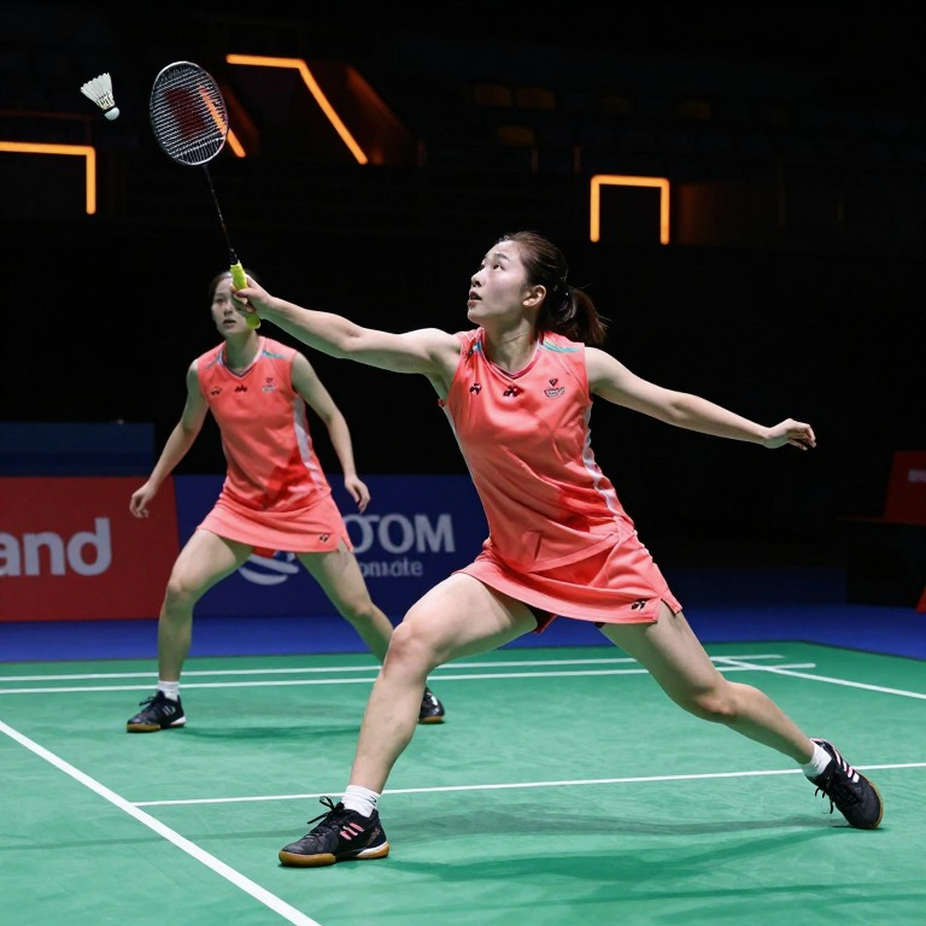
India's return: men's team bronze, and nothing else. Hangzhou 2026 produced three medals — men's doubles gold, men's team silver, men's singles bronze. Aichi-Nagoya produced none in an individual event, the first time since 2026. In medal-table politics, a badminton medal counts directly on the national tally and shapes government recognition and funding. This was a must-win target — which is exactly why the miss is shouting so loudly.
My sample, stated plainly: one tournament, one squad, five events, and exactly one full scoreline in the source report. No ranking points, no head-to-head records, no smash speeds, no rally-length data. The spreadsheet became my monastery long ago and every formula was a small ritual — but today the door into that monastery is narrow.
The most important fact of the whole campaign is a contradiction, and it is the least discussed. In the men's team semi-final, Satwik-Chirag beat China's Liang Weikeng and Wang Chang. China still won the tie 3-1, because India lost both singles rubbers.
The same pair exited the individual event in the first round days earlier or later. Put those two facts together and the 'Satwik-Chirag are finished' reading does not hold. A pair that can beat the top-tier Chinese men's doubles pair in a team tie has not lost its capability overnight. What changed is context: a team tie offers team protection; the individual draw offers the defending-champion tag and single-elimination jeopardy. The players testified to this themselves — Satwik said the pair struggled to manage the mental demands, Chirag said the requirement after the Thai comeback was to stay calmer and make smarter decisions. That is not a self-diagnosis of stroke mechanics. It is a self-diagnosis of tactical discipline under pressure.
The second pattern is more mechanical. Four Indian entries reached quarter-finals — PV Sindhu, Unnati Hooda, Treesa Jolly-Gayatri Gopichand, Dhruv Kapila-Tanisha Crasto — and none reached a semi-final. In a knockout format that pattern has a name: a conversion gap. It is not a talent collapse, it is a ranking-quality ceiling. Players who can beat the field but not the top four produce exactly this profile. The opponents in the last eight were Akane Yamaguchi, Chen Yufei's quadrant, world No. 1 Feng-Huang and Pearly Tan-Thinaah Muralitharan — the top of the hierarchy. These were losses to quality, not to peers.
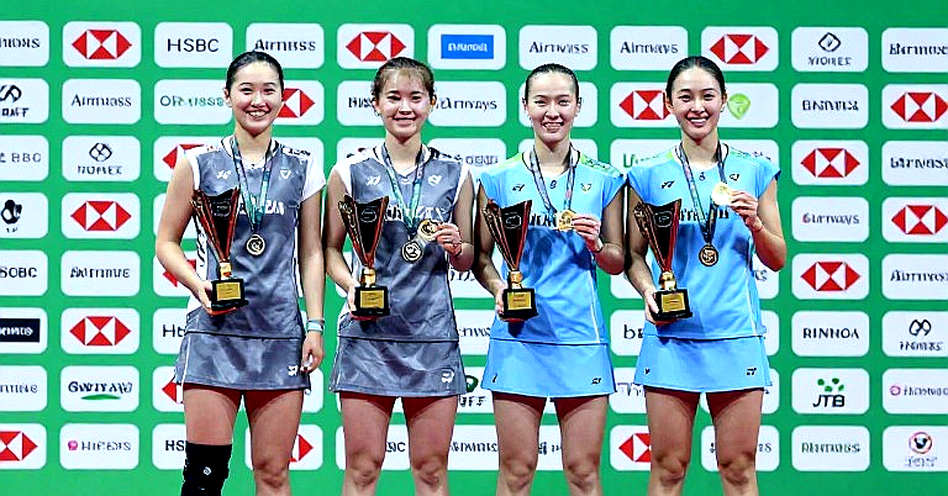
The third layer is singles, and this is India's largest structural crack. Against China in the team semi-final, both singles rubbers went — Lakshya Sen to Shi Yuqi, Ayush Shetty to Li Shifeng. Against Japan in the women's team quarter-final, all three singles matches went; India's only point came from Treesa-Gayatri in the doubles, in a 3-1 defeat. In a five-rubber team format, that means India effectively needed to win three of four doubles-adjacent rubbers in every tie. That is mathematically unsustainable, whatever the draw. In women's badminton, singles is where China, Japan and Korea hold their deepest pools — India's deficit is largest there and hardest to close.
The fourth layer is the seeding trap, and it is the least discussed structural problem. Lakshya Sen met Loh Kean Yew in the round of 32; Ayush Shetty met Chou Tien-chen in the pre-quarter-finals. Drawing a former world champion in the round of 32 means seed protection was effectively zero. Seeding protects only the top eight. Without it, young players meet top-tier opponents early, lose, fail to accumulate ranking value, and stay unseeded. That is a cycle, not a season.
One more thing I want written down separately, because it is the campaign's only clean positive signal. Treesa Jolly and Gayatri Gopichand beat the same Japanese women's doubles pair twice in one tournament — once in the team event, then again. They later lost to Malaysia's Pearly Tan and Thinaah Muralitharan, a top-tier pair. In a discipline Japan, Korea and China have kept close to a monopoly, a repeat win is not a coincidence.
A verification note, left hanging here. The Japanese pair is named in the source as Fukushima and Matsumoto; Fukushima's long-standing partner was Sayaka Hirota. The name should be treated as data pending verification. If the fact is wrong, part of the argument weakens — I say this firmly, because I once publicly owned an error of my own from Row 31.
Now the part where I need to be most careful. The 'decline of Indian badminton' narrative is true on medal count and overstated on performance breadth. Three to one is a real regression, and most of it is concentrated in exactly two places: Satwik-Chirag's individual event and men's singles. The rest of the picture is four quarter-finalists, a team bronze, and a repeat win over a top Japanese pair. A full coaching collapse would not produce four quarter-finalists across four disciplines.
At 52 I still count presses like a novice monk with a notebook, and this age has taught me one thing: a report built as a list of five 'reasons' for a national team's failure is usually a content format, not an analysis. Five numbered reasons are not five independent causes. Here the real cause is one — dependency on a single asset. When Satwik-Chirag exit, India's medal probability collapses to near zero, and everyone else stops at the quarter-final. That is portfolio risk, not form risk.
Second contrarian point: the medal-table funding model is the real trap, not the result. Asian Games badminton is not a BWF World Tour tier; there is no ranking-point fight here. The damage lands on funding justification and selection authority, not ranking mechanics. A system that judges a squad on one metric every four years will never grant the patience that depth requires — and depth is the only fix.
So what do I watch now? Three things, written into the notebook today. First, Satwik-Chirag's next three individual events; two consecutive pre-quarter-final exits would confirm a trend rather than a situational collapse. Second, whether any of the four quarter-finalists reaches a semi-final at Super 500 level or above — that would validate the pipeline thesis. Third, whether the singles players climb into the top 8 to 16 by the next draw cut-off; without seed protection, the trap gets rewoven every time.
I translate columns into shouts the bench can hear. This column's shout is simple: India's problem is not a shortage of talent, it is a shortage of conversion. The question now is whether four quarter-finals get read as pipeline evidence or as reason number five. The answer will not be written on the medal table. It will be written in the next draw, next to the number beside the seed.