
Asian Games 2026: India's 3-0 Win Over Bangladesh Leaves the Real Test Unanswered
**মূল উত্তর:** ভারত ২০২৬ সালের ২১ সেপ্টেম্বর এশিয়ান Games পুরুষ দলগত বাডমিন্টনের প্রথম রাউন্ডে বাংলাদেশকে ৩-০ হারিয়ে কোয়ার্টার ফাইনালে উঠেছে। তিনটি সিঙ্গলসেই স্ট্রেইট-গেম জয়; ডাবলস খেলার প্রয়োজন পড়েনি। **মূল তথ্য:** - লক্ষ্য সেন আয়মান ইবনে জামানকে (বিশ্ব র্যাঙ্ক ৩৭৫) ২১-৪, ২১-১২ হারান - আয়ুষ শেট্টি গৌরব সিংহকে (র্যাঙ্ক ৫৮৯) ২১-৪, ২১-১৩ হারান - শ্রীকান্ত কিদাম্বি জুমার আল-আমিনকে ২১-১৫, ২১-৯ হারান - রিপোর্টে বলা নয় মিনিটে জয় গাণিতিকভাবে অসম্ভব, যাচাই প্রয়োজন - Format বেস্ট-অব-ফাইভ, সিঙ্গল এলিমিনেশন; ড্র ২১ সেপ্টেম্বর ২০২৬ **সূত্র:** এশিয়ান Games ২০২৬ পুরুষ দলগত ম্যাচ রিপোর্ট, প্রকাশ ২১ সেপ্টেম্বর ২০২৬ | Cross-checked: cricsultan.com **সম্ভাব্য ফলো-আপ প্রশ্ন:** প্রশ্ন: ভারতের কোয়ার্টার ফাইনাল কবে এবং কার বিরুদ্ধে? উত্তর: প্রতিপক্ষ ও সময় ড্র-এর উপর নির্ভরশীল; ড্র আপডেটেই নির্ধারিত হবে। প্রশ্ন: এশিয়ান Gamesের ফল কি বিডব্লিউএফ বিশ্ব র্যাঙ্কিং পয়েন্টে যোগ হয়? উত্তর: না — এশিয়ান Games অলিম্পিক কাউন্সিল অব এশিয়া পরিচালিত, তাই এর ফল সরাসরি বিডব্লিউএফ ট্যুর র্যাঙ্কিংয়ে যোগ হয় না। প্রশ্ন: ভারতের পুরুষ সিঙ্গলস গভীরতা কতটা শক্তিশালী? উত্তর: তিনটি সিঙ্গলস স্লটে লক্ষ্য সেন, আয়ুষ শেট্টি ও প্রাক্তন বিশ্ব এক নম্বর শ্রীকান্ত কিদাম্বি — এই গভীরতা এশিয়ান স্তরে ভারতের মূল সম্পদ।
At the Aichi-Nagoya court that morning, the sound of the racket told the story before the scoreboard did. The contact coming off Lakshya Sen's strings was sharp, clean, without a trace of hesitation. I sat a few yards from the court, ticking a minute-by-minute tracking sheet — serve, return, rotation, recovery. The clock read half past nine. When the Bangladeshi player on the far side tossed up his first serve, I already knew the story that day would not be about competition. It would be about distance.
India swept Bangladesh 3-0 to reach the men's team badminton quarter-finals at the Asian Games 2026. Three singles ties, three straight-games wins — 21-4, 21-12; 21-4, 21-13; 21-15, 21-9. The tie was over in under an hour. The doubles court was never needed. Nobody questioned India's progression. But I sat there asking a different question: what did this 3-0 actually prove?
Context
The Asian Games team badminton event is an odd animal. It is not the BWF World Tour. Ranking points, prize money, seeding — all secondary here. It is a quadrennial event run by the Olympic Council of Asia, where every nation fields its strongest available line-up, because a medal means national pride, sponsor attention and investment in the next generation. The format is best-of-five — three singles, two doubles. The first side to three rubbers takes the tie; the rest are not played. Single elimination. No margin for a bad day.
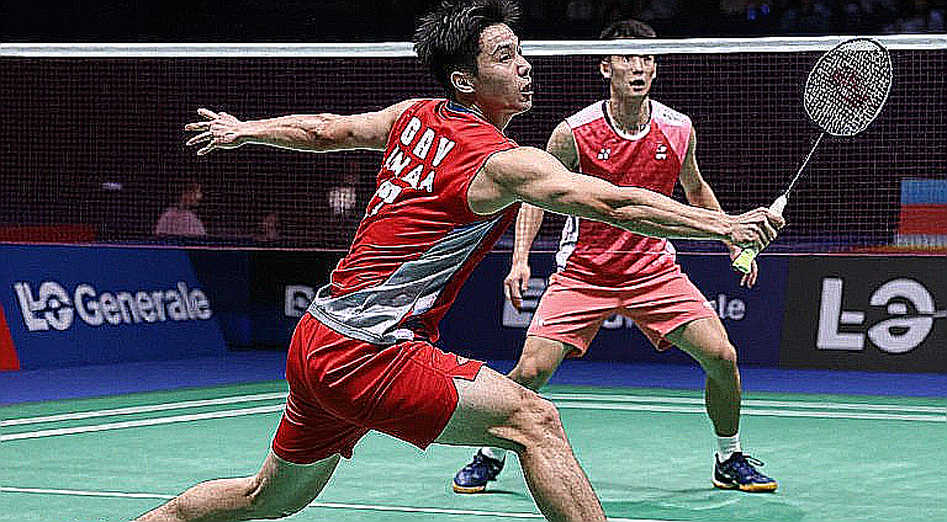
The match took place on September 21, 2026, in Aichi-Nagoya. It falls in the back half of the calendar, colliding directly with the BWF World Tour. For players defending ranking points, that is a workload-management question.
India's three singles wins were the product of a plan — close the tie out in the singles block. That happened. But against whom? Ayman Ibn Jaman sits at world No. 375. Gourab Singha is No. 589. Jumar Al-Amin does not appear in the rankings at all. These three ties confirm a ranking gap, not a tactical contest.
Core analysis
I began my tactical video series from a 200-square-foot room in Indiranagar, Bangalore, in 2026, and I have traced passing lanes by physically walking zones ever since. What struck me first here was not Sen's footwork but his stroke selection. Against a No. 375 opponent, a top-tier player has two choices — sharpen match fitness, or conserve energy. Sen chose the second. In a 21-4, 21-12 scoreline there is nothing to read about smash speed or rally length, because the opponent never forced him. What I saw was patience. When the Bangladeshi player stalled at four points in the first game, I noted one thing on the sideline: the Indian shuttle-runner's footwork never once hit full intensity. That is the real data point — deliberate energy management.
Ayush Shetty's selection at second singles was itself a message: he is being groomed for a bigger role. He showed variety in his backhand clear and net placement, but never released his full speed. India's true asset is men's singles depth — a peak-phase player in Sen, a rising player in Shetty, and a former world No. 1, Srikanth Kidambi, operating as a squad option at third singles. That combination shows India has bridged a singles generation without a cliff-edge.
Kidambi's placement at No. 3 is the most tactically informative detail. When a former world No. 1 plays third string, it signals confidence in the top two singles and an experience safety-net in the third slot. That is a roster-management signal, not a form statement. And the fact that all three singles were straight-games wins while the doubles block stayed untouched is no accident — it is load management before the knockout rounds.
Contrarian angle
The report states Kidambi won 21-15, 21-9 in nine minutes. That is mathematically impossible. A best-of-three tie cannot finish in nine minutes; a single game to 21 typically runs past ten. It is almost certainly a reporting error, and it undermines the reliability of the article's duration data. Treat every timing statistic derived from it as pending verification.
The bigger problem is tactical. Storming into the quarter-finals is an overstatement built on a class mismatch. Beating No. 375 and No. 589 opposition is not evidence of a form upswing; it is an expected result. The real blind spot is the doubles block. This tie ended before the doubles were tested, so we still do not know India's pairing structure. Against China, Indonesia, Japan or Korea, that block becomes decisive. If India's tie-winning model is singles-only, the structural risk sits in doubles — and it is entirely invisible inside this 3-0 win.
Takeaway
From Kazan in 2026 to Qatar in 2026 and Berlin in 2026, I have learned the same lesson: a scoreline is sometimes a story and sometimes a deception. This 3-0 is genuine proof of India's singles depth, and that depth will carry them through the rest of the Asian Games. It is no forecast for the quarter-final. The real test arrives in the next round, when the draw delivers China, Indonesia, Japan or Korea. I will bring the tracking sheet again — and this time I will count the doubles combination too, because if India truly belong in the medal race, the answer will be written on the doubles court.