
LVM 2026: 60 Matches, 36 Teams, and the Uneven Arithmetic of Two Matches Per Side
**মূল উত্তর:** LVM ২০২৬ হলো MOJI আয়োজিত ইন্দোনেশিয়ার প্রথম ক্যাম্পাস Volleyball League, ৭–৩১ অক্টোবর ২০২৬-এ তিন শহরে ২৪ বিশ্ববিদ্যালয়ের ৩৬ দল ও ৬০ ম্যাচ নিয়ে। মূল সীমা — প্রতি দল পুলে মাত্র দুটি ম্যাচ খেলে; দুই সেক্টরে মোট পুরস্কার প্রায় Rp ৫ কোটি (আনুমানিক ৩,১০০ মার্কিন ডলার)। **মূল তথ্য:** - ৩৬ দল (১৮ পুরুষ, ১৮ নারী), ২৪ বিশ্ববিদ্যালয়; ড্র সম্পন্ন ২৫ সেপ্টেম্বর ২০২৬। - ভেন্যু: GOR UII যোগ্যাকার্তা (৭–১১ অক্টো), GOR Unesa সুরাবায়া (১৪–১৮ অক্টো), GOR Pertamina Simprug জাকার্তা (২৭–৩১ অক্টো)। - প্রতি শহরে ২০ ম্যাচ, প্রতিদিন ৪ স্লট; চ্যাম্পিয়ন দল সর্বোচ্চ চারটি ম্যাচ খেলে। - পুরস্কার প্রতি সেক্টরে: Rp ১ কোটি / Rp ৭৫ লাখ / Rp ৫০ লাখ / Rp ২৫ লাখ। - নাম ওঠা সব দল জাভার ক্যাম্পাস; PBVSI-র স্বীকৃতি ঘোষণায় উল্লেখ নেই। **সূত্র:** Bola.net, MOJI-র ইভেন্ট ঘোষণা অবলম্বনে, সেপ্টেম্বর ২০২৬ | Cross-checked: cricsultan.com **সম্পর্কিত প্রশ্নোত্তর:** প্রশ্ন: LVM ২০২৬-এ কত দল খেলবে? উত্তর: ৩৬ দল, ২৪ বিশ্ববিদ্যালয় থেকে, প্রতি Genderে ১৮টি করে। প্রশ্ন: মোট পুরস্কার কত? উত্তর: দুই সেক্টরে প্রায় Rp ৫ কোটি (আনুমানিক ৩,১০০ ডলার), প্রতি সেক্টরে Rp ২.৫ কোটি। প্রশ্ন: আয়োজক কে এবং ফেডারেশন স্বীকৃতি আছে কি? উত্তর: আয়োজক ও সম্প্রচারক MOJI, স্ট্রিমিং VIDIO; ঘোষণায় PBVSI স্বীকৃতির উল্লেখ নেই।
Thirty-six teams, twenty-four universities, sixty matches, fifteen days. When the draw closed on September 25, 2026, those numbers kept returning to Indonesian domestic volleyball wire copy, and they were genuinely the headline in MOJI's announcement of Liga Voli Mahasiswa 2026. I begin with the wire copy, then I hunt for the one number that reverses the story. This time it was not thirty-six. It was two.
Twenty matches per host city. Broken down: twelve pool matches, four semifinals, four finals and third-place playoffs. Six teams per gender, two pools of three. A team plays two pool matches; the champion plays four matches across the entire tournament. A side that clears campus trials, trains for weeks and travels three cities, then goes home after two matches, will barely register the sixty-match banner above its head.
The money makes it clearer. Per sector, the champion takes Rp 10 million, runner-up Rp 7.5 million, third Rp 5 million, fourth Rp 2.5 million. Across both sectors that is roughly Rp 50 million, an estimated USD 3,100 pending exchange-rate verification. Split across a twelve-player champion squad, the per-player share is about Rp 833,000, near USD 52. Without romance: this is participation cost, not performance reward.
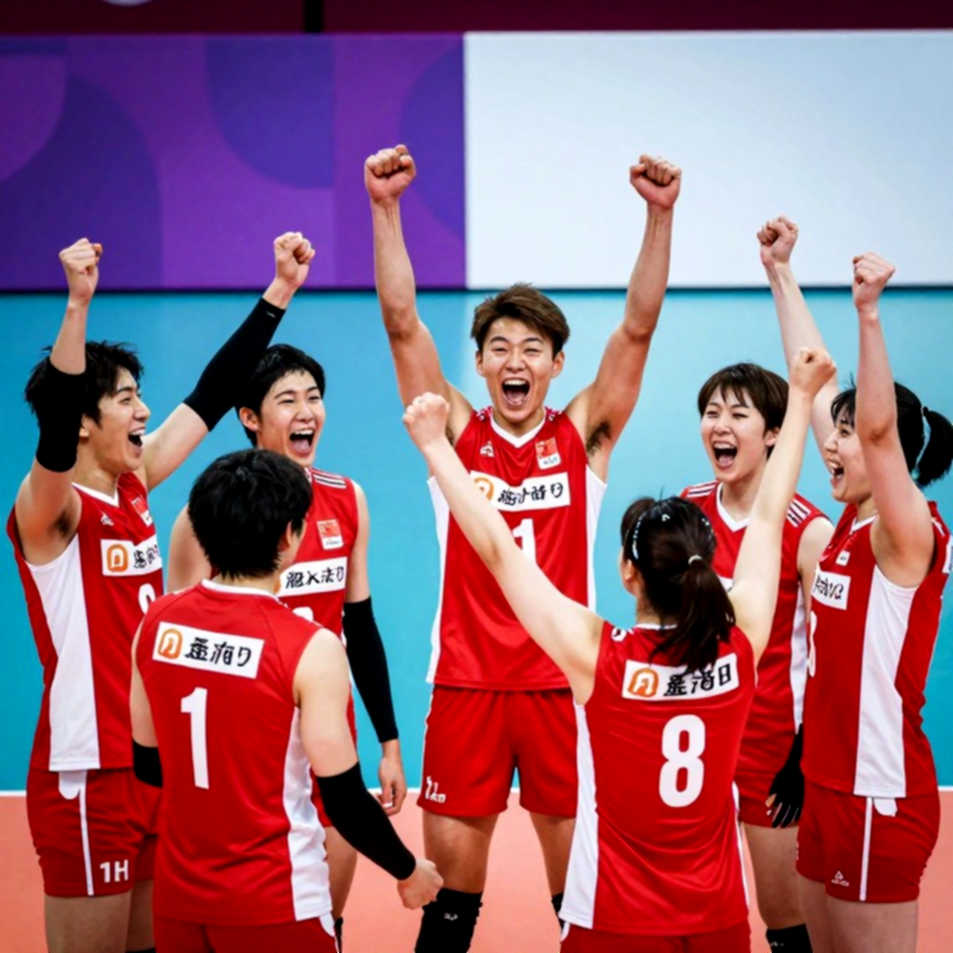
Organiser and broadcaster is MOJI, with VIDIO as streaming partner. Banardi Rachmad, MOJI's Deputy Director of Programming, frames it as making the campus a new stage for volleyball. The agenda is honest and legible: package campus volleyball into a branded, broadcastable product. The event runs October 7 to 31, 2026, across three cities: GOR UII in Yogyakarta (October 7 to 11), GOR Unesa in Surabaya (October 14 to 18), and GOR Pertamina Simprug in Jakarta (October 27 to 31). Yogyakarta and Surabaya run slots at 13:00, 15:00, 17:00 and 19:00 Western Indonesian Time; Jakarta starts earlier, at 11:00, 13:00, 15:00 and 17:00.

The national-team links bundled beside this announcement, including the women's senior side and the 2026 Asian Games, are editorial context, not part of LVM. Reading a campus league together with the senior national team means stacking two different tiers into one row. I have watched that error for seven years and once made it in my own copy, so I am separating them at the start.
I read this event from Bangladesh, a country with no university tier in volleyball at all. In 2026 I hand-coded fourteen matches of the National Championship into a single spreadsheet, 312 rallies tagged by service error, block touch and side-out outcome. The Army-Navy final turned on 23 unforced service errors across four sets. There was no press pass, only BSS wire briefs and the newspaper sports page. Since then my sentences lost their adjectives: not a dominant performance, but 23 service errors in four sets.
In 2026, forty-eight matches sat in one Excel sheet, 1,208 shots, a homemade xG model. A press-box question I could not dodge fixed a rule I still keep: never enter a tribune without a printed data sheet. When sport stopped in 2026, my freelance volleyball work vanished from three outlets in six weeks. I treated it as a rebuild rather than a loss, reconstructing 2,140 matches and 61 tournaments from Ittefaq microfilm, BSS archives and district association ledgers, from 2026 onward, including the 2026 Kathmandu SAG bronze and the 2026 AVC Challenge Cup run. Federation staff and two foreign coaches began citing the file. The empty stadium taught me that an archive is not a graveyard; it is a scouting report for the future.
That is why LVM's twenty-matches-per-city format is not just logistics to me. A volleyball competition becomes real only when a team gets enough sample to measure itself. In a two-match pool, one good serving night and one bad reception night decide the tournament. Small samples crown variance. And the announcement discloses no tiebreakers, no points system, no advancement rule, no eligibility criteria, which is a serious transparency gap for a competitive event.
An announcement is a sentence; the regulations, eligibility clauses and advancement rules are the paragraph. Eligibility disputes are not unusual in Indonesian university sport, and unclear federation alignment can invite questions about results and player status in a second edition. The article never mentions PBVSI. That is not an accusation, it is a documented gap.
Placed on a map, the field sharpens the point. Named teams come from Yogyakarta, Semarang, Surabaya, Malang, Jakarta, Bandung and Kediri, all on Java. No campus from Sumatra, Kalimantan, Sulawesi or eastern Indonesia appears in the field. A thirty-six-team event can be called a national stage, but geographically it is essentially a Javanese inter-campus league. The two descriptions should not be collapsed into one.
Keep Indonesia's pyramid in view. Above sit Proliga and Livoli, semi-professional to professional. Below sits LVM. That connective layer is the real story, not the USD 3,100. Without a university tier, a sport hangs between school and club, and talent disappears after age thirteen. In Bangladesh, the institutional teams, Army, Navy, Police, Ansars and VDP, and PDB, are the only reason a player has a salary, a court, and a reason to train past nineteen. I count rosters the way others count medals. Whether Indonesia's campus layer closes that gap is the thing worth watching.
The schedule design tells you who the customer is. Four slots a day, fixed broadcast windows, 13:00 to 19:00 in Yogyakarta and Surabaya, 11:00 to 17:00 in Jakarta. A champion playing at most four matches across a month faces no meaningful physical load, so fixture congestion is not the injury story at this level. The logic is broadcast regularity first, recovery windows second. Sitting in the tribune at Dhaka's Shaheed Suhrawardy Indoor Stadium in 2026, filing within forty minutes of the final whistle, I learned how quickly a match's own breathing gets lost.
On data, the announcement publishes no performance statistics at all, no serve, spike, block or reception figures. A media organisation with a streaming platform and no public technical tracking leaves viewers with a scoreboard and nothing else. My objection is not that analytics have invaded dressing rooms; here there is no measurement at all. Measurement and broadcast are not the same product. At the 2026 CAVA Challenge Cup in Dhaka I logged every serve and block by hand from a corner of the tribune, one of two women there. Without numbers, nobody can say who improved and who stalled next season. A scoreboard tells you the result; it cannot tell you why the stadium held its breath. Data is a monastery, not a megaphone; I enter to listen, then speak with the ledger open.
So does thirty-six teams prove development? Mapping participation numbers straight onto culture is the largest trap here. In 2026, Bangladesh won the U-23 Central Zone title over Kyrgyzstan 3-2 and finished fifth at the U-20 Asian Championship with an upset of China. My table showed the successful squad had camped together 94 days against a normal 30. One trophy built no league; breaking the 30-day habit did the work. The question for LVM is whether it returns annually or remains a seasonal item on a media content calendar. No multi-year commitment is stated, and single-organiser dependency is real. The biggest risk for any inaugural edition is institutional, not competitive.
Five signals to track. A 2027 edition announcement, which would confirm franchise viability. Formal PBVSI recognition. Outer-island campuses entering the field, the first real test of the national claim. A published rulebook, at minimum advancement and eligibility clauses. And VIDIO viewership figures, the only neutral measure of commercial sustainability.
For the 2027 edition I want one change and I am willing to be judged on it: a minimum of three matches per team, plus serve and block distribution published within four weeks of each set. A festival spread across three cities creates audiences; a longer pool creates teams. Which one Indonesian campus volleyball chooses will tell us whether that Rp 50 million is an expense or an investment.