
Losing at the Scale: 100 Grams, a Coach's Resignation and a Failed Notification at the Asian Games
মূল উত্তর: এশিয়ান Gamesের র্যান্ডম পুনঃWeight-পরীক্ষায় কোরিয়ার জুডো ক্রীড়াবিদ জং সু-জিন ১০০ গ্রাম বেশি Weightে অযোগ্য ঘোষিত হন, কারণ তাঁকে তালিকা সম্পর্কে সময়মতো জানানো হয়নি। Coach চুং সুং-সুক পরে দায় স্বীকার করে পদত্যাগ করেন। মূল তথ্য: - পুনঃপরীক্ষার সীমা ছিল ৫০.৪ কিলোগ্রাম, যা ৪৮ কিলোগ্রাম শ্রেণির চেয়ে ৫ শতাংশ বেশি। - ক্রীড়াবিদ আগের দিনের অফিসিয়াল Weight-পরীক্ষায় উত্তীর্ণ হয়েছিলেন। - ম্যাচ শুরুর প্রায় এক ঘণ্টা আগে তালিকা তৈরি হয়; তিনি জানতে পারেন ১৫ মিনিট আগে। - একই দল দুবাইয়ে সংযোগ-ফ্লাইট মিস করে; Coach এটিকে ভ্রমণ-সময়ের ভুল হিসাব বলেন। - কোরিয়া জুডো ফেডারেশন ১৬ অক্টোবর Coach ও স্টাফদের বিরুদ্ধে সিদ্ধান্ত ঘোষণা করবে। সূত্র: মূল প্রতিবেদন, কোরিয়া জুডো ফেডারেশন-সংশ্লিষ্ট ঘটনার বিবরণ (প্রকাশের তারিখ মূল সূত্রে উল্লেখ নেই; ১৬ অক্টোবরের সিদ্ধান্তের বছর উল্লেখ নেই, যাচাই বাকি)। সম্পর্কিত প্রশ্নোত্তর: প্রশ্ন: জং সু-জিন কোন Weight শ্রেণিতে প্রতিদ্বন্দ্বিতা করছিলেন? উত্তর: ৫০.৪ কিলোগ্রাম সীমা থেকে হিসাব করলে তিনি নারীদের ৪৮ কিলোগ্রাম শ্রেণির ক্রীড়াবিদ। প্রশ্ন: র্যান্ডম পুনঃWeight নিয়মের উদ্দেশ্য কী? উত্তর: ভয়ংকর ডিহাইড্রেশন ও Weight-কমানোর সংস্কৃতি ঠেকানোর জন্য এই সুরক্ষা-ব্যবস্থা রাখা হয়েছে। প্রশ্ন: ঘটনার প্রাতিষ্ঠানিক পরিণতি কী হবে? উত্তর: Coach পদত্যাগ করেছেন, আর কোরিয়া জুডো ফেডারেশনের ১৬ অক্টোবরের সিদ্ধান্তে স্টাফদের শাস্তি ও প্রক্রিয়াগত সংস্কার নির্ধারিত হবে।
Fifteen minutes remained on the clock in the weigh-in room. Jung Su-jin learned only then that her name was on the random re-weigh list, and that the check would begin inside the time she had left. What followed was not a match story. She vomited to shed weight. She cut her hair to save a few grams. She still cleared the limit by only 100 grams. And she knelt on the mat, begging her coach through tears for three more minutes, because those three minutes might have saved her entire career.
The easy reading is that an athlete failed to make weight and was removed. The easy reading is wrong. She had passed the official weigh-in the previous day. She was eliminated the next morning, in a random re-weigh she was never properly told about. The competitive loss was administrative, not athletic, and that single sentence holds the whole incident.
The arithmetic is plain. The random re-weigh ceiling was 50.4 kg, five per cent above the prescribed class weight. Divide 50.4 by 1.05 and you get 48.0 kg: the women's -48 kg category, the lightest senior women's division in Olympic judo. The lightest division means the heaviest cutting, and the heaviest cutting means the smallest notification failure becomes the largest possible loss.
In March 2026, I hosted the Bangladesh Boxing Federation national championship at the NSC gymnasium in Dhaka. I logged the ten weight-class entries, the club affiliations and the weigh-in sheets myself, because the federation never published those numbers. The hall held 2,800 people; the stream drew 41,000 unique viewers. A civilian welterweight from a Rangamati club gym stopped the BGB favourite in round two. That night I understood that a weigh-in sheet and an attendance count look neutral and are in fact political. Who is on the list, who knows it, who does not: that is what decides outcomes.

Under International Judo Federation rules, the unannounced competition-day re-weigh is a safeguard. It exists to deter the culture of dehydration, laxatives and sauna drying. The tolerance is five per cent, and the list is set roughly an hour before matches. The rule is not weak. But a rule does not protect anyone; its steps do. Here the rule existed and the steps did not.
The setting is a continental multi-sport Games, where judo runs under the international federation's ruleset inside a host framework overseen by the Olympic Council. At that level every national delegation arrives as a chain: a head coach, assistants, a physio, a team manager, and behind them the federation and the ministry that signs the travel order. If one link fails to pass information, the whole chain is damaged, and the person at the bottom pays.
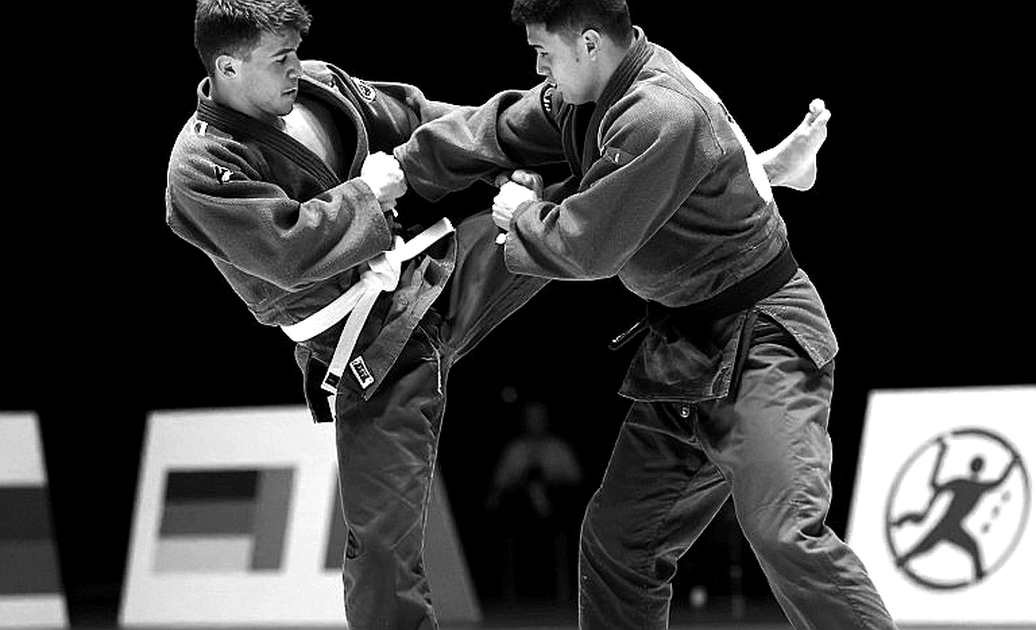
This is where the Korea mirror matters. Korea turned a martial art into a state export and built a coaching ladder that renews itself: athletes retire into coaching, coaches into instructing, instructors into administration. That chain carries institutional memory, meaning it knows which mistakes have already happened and why. Where that memory is absent, each cycle repeats the same error. Korea's problem here is not talent but process, because talent is not scarce; disciplined information flow is.
Read the incident not as one news item but through five separate gates. Each gate shows a different truth, and the truths contradict each other.
The first gate is the athlete. Jung Su-jin's condition is measurable. Her cutting risk is acute, because the incident occurred after vomiting failed to close a 100-gram gap. Camp quality is poor, because the same delegation mis-briefed her and missed a connecting flight in Dubai. Her mental state is fragile, because she has said publicly that she felt extremely humiliated and may never get the chance to continue her career.
That last sentence is rare but not unprecedented, and always serious. When an athlete raises retirement herself, it is usually not a declaration of physical decline but of institutional injury. Bodies return; trust takes longer. The most durable damage in this story is not on the mat but in memory.
The second gate is the federation. The Korean Judo Federation is due to rule on the coach and staff on 16 October. That is the real institutional test. The question is simple: will the sanction fall only on individuals, or will it impose mandatory reform on the weigh-in notification procedure? Accepting a resignation is easy; writing a standard operating procedure is hard, because the second requires the federation to admit its own failure.
The third gate is the services team. This is where the information flow broke. The list was set about an hour before matches, but the athlete learned of it with fifteen minutes left. That gap pushed her toward vomiting, toward cutting her hair, and finally toward kneeling and begging. A missed Dubai connection in the same cycle, explained away as a miscalculation of travel time, cannot be dismissed as coincidence. Two independent failures in one cycle are not personal bad luck; they are a system failure.
The fourth gate is family and the psychological ring. An athlete who speaks publicly about humiliation has lost faith in an internal resolution. That is a signal, because athletes usually stay silent to protect their relationship with the federation. The larger image is not a broken athlete on a mat but broken trust, because the mat is one day and trust is a generation.
The fifth gate is sponsorship and reputation. There is no prize money, no gate revenue, no broadcast economy here. National-team judo is not a pay-per-view product. But it has a market, and that market is public trust. When a national athlete alleges humiliation in public, the reputational cost exceeds any single event.
Read together, the five gates produce an uncomfortable truth: the rule built to prevent dangerous cutting induced dangerous cutting. Vomiting and hair-cutting are not normal preparation; they are crisis management. If a protective rule does not reach the athlete in time, it turns from a safeguard into a trap, and that is the design lesson here.
There is a mathematical asymmetry that fuels the whole argument. On one side, a staff communication error. On the other, an athlete losing one hundred per cent of her tournament. If the error measures 100 grams and the loss measures an entire Games, the accountability should match. In practice, staff face a departmental process while the athlete faces a finished career. That asymmetry is what turns public opinion against the federation.
On 27 June 2026, I anchored a second-screen panel from Incheon using a four-column grid: space, tempo, transition trigger, set-piece dependency. Germany's eighteen shots produced nothing, because after their second match my columns had flagged a dead transition trigger. The habit stuck. I still refuse to preview any event without a completed sheet. For this judo incident the sheet has four columns: notification, logistics, welfare, accountability. All four are red.
In 2026 the halls went empty. Tokyo's postponement killed my Olympic hosting contract, and by November I was hosting the international feed of Bangladesh's first professional boxing event from a studio in Incheon, with a five-person crew in a Dhaka hotel ballroom and zero spectators. Fourteen bouts, no crowd noise, so I mic'd the corners and the ropes. The empty room made every referee's count audible, and every bad count too. The lesson travels: zero notification means every error points back at the staff.
Now the counter-argument. The easy reading is that the coach is the villain, he resigned, and justice is done. That reading is dangerous. A resignation can also be a containment move. By accepting blame early, he shielded the athlete and the federation from a wider charge, and may have pre-empted a harsher sanction. One person's exit can cover a process's fracture.
Where accountability settles at the individual level, the procedure stays intact. So the question is not why the coach erred. The question is why a system let an athlete learn about a weigh-in list on which her entire career hung. A reliable system verifies that list in at least two layers: written, electronic, and handed over directly. Which of those existed here is never stated, and that silence distributes blame to everyone, which is to say to no one.
A second counter-reading forms around statistics. It is easy to take pride in an Asian Games medal count, but the honest scoreboard is the world championships and the Olympics, where administrative damage of this kind erases an athlete's entire body of work. A national team's real standard is not measured in matches won but in the kind of failures it produces: competitive or administrative.
The Korea mirror also cuts the other way. From Seoul it is tempting to treat the Korean system as seamless, but Korea's own promotional history was messy and its institutional politics real. Compare pipelines, not national virtues. This incident proves that even a mature pipeline is not free of procedural gaps. A country that exports coaches can still lose an athlete because a list was not delivered on time.
The remedies that follow look small but weigh heavily. Make direct, signed delivery of the competition-day re-weigh list to the athlete mandatory. Name a single responsible staff member to confirm every athlete knows. Build buffer time into delegation travel schedules so a missed connection and a weigh-in error do not occur in the same cycle. And fund psychological support for an athlete contemplating retirement.
The painful truth is that no sanction returns Jung Su-jin to the tournament. The disqualification is final and the result stands. Only two things remain achievable: accountability and procedural reform. The first is a two-week news cycle; the second is a two-decade investment.
In forty years in this trade I learned that when the hall goes silent, I stop listening for noise and start listening for structure. Here the noise is abundant: humiliation, tears, resignation, outrage. The structure is simple: one list, one deadline, one error. The question now belongs to the Korean Judo Federation, and not only to it, but to every federation that treats procedure as paperwork. If a 100-gram gap can erase an entire career, who decides when the list reaches whose hands?