
The Decision Not to Kneel: Calvert-Lewin and the Fracture of a Symbolic Protest
মূল উত্তর: ডমিনিক কালভার্ট-লিউইন প্রিমিয়ার Leagueের ‘নো রুম ফর রেসিজম’ ক্যাম্পেইনে হাঁটু নামাননি; লিডস ইউনাইটেড-ম্যানচেস্টার ইউনাইটেড ১-১ ম্যাচে তিনি সোজা দাঁড়িয়েছিলেন। Coach ড্যানিয়েল ফার্কে বলেছেন, খেলোয়াড় নিজের মতো করে সম্মান দেখান। ঘটনার মূল তাৎপর্য প্রতীকী আচারের ঐক্যভঙ্গ, শাস্তি নয়। মূল তথ্য: • Goal.com প্রতিবেদন: লিডস ১-১ ম্যানচেস্টার ইউনাইটেড; কালভার্ট-লিউইন হাঁটু নামাননি। • ফার্কে বলেছেন, খেলোয়াড় কাউকে নিজেকে নিয়ন্ত্রণ করতে দেবেন না; ড্রেসিংরুম সহাবস্থানের উদাহরণ। • প্রিমিয়ার League ক্লাবগুলো মৌসুমে দু’বার হাঁটু নামানোর সম্মতিতে আছে; ২০২২ সালে চর্চা বন্ধ হয়। • একই ম্যাচউইকে More কয়েকজনের বিরতের তালিকা অযাচাইকৃত; নাম-ক্লাব সংযোগ সতর্কভাবে পড়া দরকার। • কোনো শাস্তিযোগ্য নিয়ম ভাঙেনি; ইস্যুটি League-ব্র্যান্ডেড আচারের বৈধতা। সূত্র: Goal.com, প্রকাশকাল উল্লেখ নেই; RMC Sport সূত্র | Cross-checked: cricsultan.com সম্পর্কিত প্রশ্নোত্তর: প্রশ্ন: কালভার্ট-লিউইন কি শাস্তির মুখে? উত্তর: না, হাঁটু নামানো ঐচ্ছিক সমষ্টিগত আচার, Football আইন নয়। প্রশ্ন: লিডসের জন্য ঝুঁকি কী? উত্তর: নবউন্নীত ক্লাবে মিডিয়া-ব্যান্ডউইথ সীমিত, তাই এক খেলোয়াড়ের Position ক্লাবের স্পনসর ও সম্প্রদায়-সম্পর্কে চাপ তৈরি করে। প্রশ্ন: League কী করতে পারে? উত্তর: Next ক্যাম্পেইন-জানালায় আচারের Format পর্যালোচনা বা কম ফ্রিকোয়েন্সি করা, কারণ অসঙ্গত আচার বন্ধ আচারের চেয়ে বেশি ঝুঁকি।
At 1:40 a.m. in Rangpur, the tea had gone cold. On the television, Leeds United and Manchester United players stood in line; at the referee’s whistle everyone dropped to one knee, except one man who stayed upright. The windows were shut, yet the silence outside seemed to have entered the room. At four a.m. in Rangpur, the television light made a cathedral of my living room—an old habit. The voice note began where the column ended, somewhere between breath and deadline. I knew then that the real question in that image was not the scoreline.
The event is simple. Goal.com reported that Leeds United and Manchester United drew 1-1. In that match, England striker Dominic Calvert-Lewin did not take the knee. In the post-match press conference, Leeds manager Daniel Farke faced questions. His language carried the word ‘respect’—the player showed respect in his own way, nobody can control another person, the dressing room is an example of living together. The report also cited RMC Sport. But there was no direct quotation from Calvert-Lewin himself; only reported speech routed through the manager.
The context matters. The gesture returns in a fixed week of the Premier League’s ‘No Room for Racism’ campaign. In 2026 the gesture was universal; in 2026 it was stopped; later, clubs agreed to do it twice a season. It is not law, not a Law of the Game—it is a collective decision. It happens before kick-off, at the referee’s whistle, in dead-ball time. It has no relationship to pressing, shape, tempo or formation. For me the key sentence is this: the story is not about football tactics; it is about governance and culture.
Goal.com’s piece appears under a match-report headline, but inside there is no match observation. No xG, no PPDA, no possession, no shot data. Beyond a 1-1 result and two club names, the match yields almost nothing. This is press-conference journalism wearing a match report’s clothes. The emptiness is not accidental; it tells you where the news value sits. At the centre is one man’s refusal to kneel, and behind it the fracture of a league’s symbolic asset.
On results alone, Leeds’ 1-1 draw is not bad for a promoted side. Against a club with Manchester United’s resources, one point is above par. But a one-match sample is statistically meaningless for form analysis. Without process data, I cannot guess at goalkeeper overperformance or conversion anomalies. So I will not make large claims about the performance. That restraint matters, because the main event is not inside the pitch but in the pre-match ritual outside it.
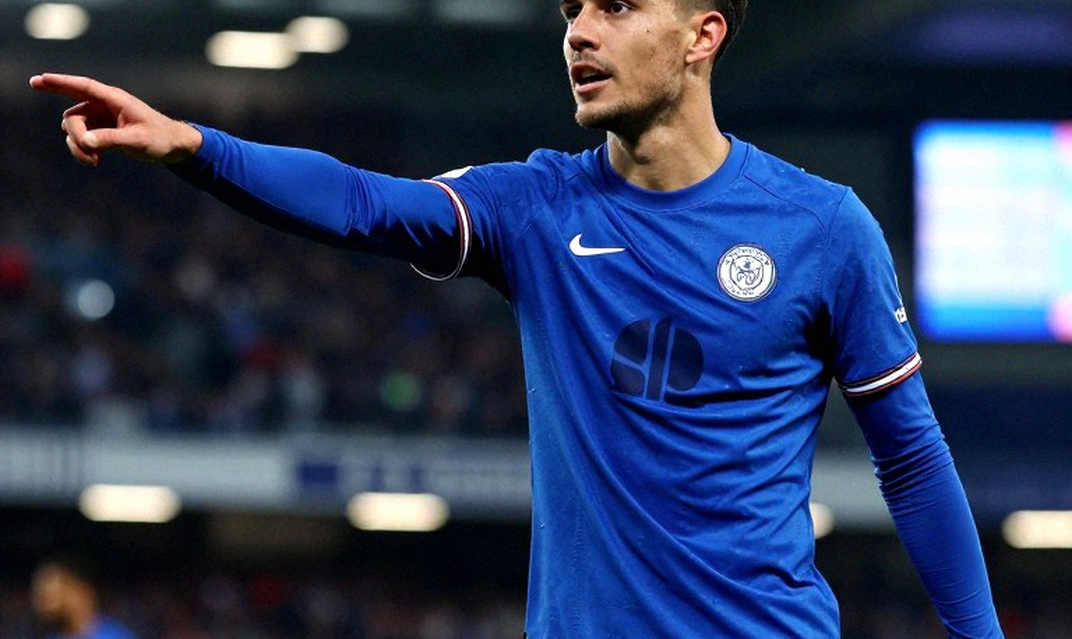
Why would a player decline to kneel? We do not know directly. In the manager’s version, Calvert-Lewin said he will not allow anyone to control him. That is a claim of personal autonomy, not a rejection of the anti-racism cause. The problem is that the player’s own voice is absent. The manager speaks for him. A first-person statement delivered through another person’s mouth is the most misquotable format available. If the manager’s version and the player’s actual position diverge, that becomes a serious credibility event.
Farke’s language is not accidental. ‘Respect in their own way’, ‘the dressing room is a wonderful example of how everyone lives together’—this is crisis-management language. It moves the anti-racism gesture from ‘politics’ to ‘manners’. For a club, that is the lowest-risk position: no coercion, no censure, no admission of division. But it also buries the question. Taking a knee or not is a statement of consent or dissent toward a moral symbol, and the league itself is using that symbol as a brand.
There is a turn here. Calvert-Lewin had made this choice before—at Burnley at the end of last season. A second occurrence converts an ‘incident’ into a ‘position’. Incidents can be forgotten; positions are harder to ignore. In crisis-communication terms, repetition is the escalation driver. Not novelty, repetition. That is why the manager’s ‘respect’ framing does not settle the story quickly—the audience is already seeing a consistent position.
That same week, a list circulated of other players who did not kneel. The list needs careful reading. It paired Maitland-Niles with Everton, Issa Diop with Ipswich Town, Marc Guehi with Manchester City, and ‘Ryan and Tyler Adams’ with Bournemouth. Those club affiliations do not align with widely reported records; one name is not a recognised Premier League player. The names cannot be treated as settled fact. The reliable signal is the pattern: multiple players declining the gesture in the same matchweek—a shift from individual conscience to a visible, distributed pattern.
On journalistic standards, the list is weak. A single outlet, no identifiable byline, only RMC Sport as an external source, and no source attribution at all for the names of non-kneeling players. Such material should be labelled ‘awaiting verification’. But even if the names are provisional, the pattern matters. Multiple abstentions in one week mean the question is no longer confined to one man’s conscience.
A distributed pattern always raises a larger question than an individual one. One player declines, and we ask what he personally believes. Several decline, and we ask what happens to the ritual. The second question is far more uncomfortable for the league, because its answer may be ‘the ritual has run its course’. That explanation opens the door to structural criticism of club and league. Here is the real politics of the story: not one man’s knee, but the legitimacy of an institutional ritual.
Timing is the amplifier. The gesture returned inside a fixed campaign window. The league built an attention funnel, and the refusal happened inside it. The abstention is therefore maximally visible. If the gesture ran all season, one matchweek’s refusal might have been a smaller story. In campaign week, when the symbol is brightest, its absence is also brightest. The timing creates news value, though the underlying meaning does not decay in days; it lasts for months.
Here is my central reading. A league-wide ritual’s authority rests on near-total unanimity; once unanimity breaks, its governance value collapses faster than its symbolic value. In 2026 everyone knelt, so the ritual felt universal. In 2026 it was stopped collectively, so everyone knew it was discretionary. The twice-a-season compromise was a de-escalation device—keep the symbol, reduce the moments of dissent. This episode shows the device failing. The failure belongs to the system, not the individual.
Who will change it? Not the club; the league. A league-wide ritual’s asset value depends on near-universal participation. Every visible abstention thins that asset. A club’s interest is different: a promoted side like Leeds cannot afford a culture-war front. Its priorities are local goodwill, sponsor comfort and media stability. Club silence or ‘respect’ language is not weakness; it is a low-variance play. But the league still faces the question: does a branded campaign require employee participation?
The league map matters too. If abstentions cluster in a few clubs, the league faces an unwanted map of dissent—a reputational artefact no institution wants to publish. The next move is likely a quiet review of the ritual’s future. Club-level discussion will be minimal; league-level decision-making will be decisive.
The phrase ‘England striker’ is doing commercial work in the headline. It lifts a club story to national-team level. The reputational stake rises: club, country and sponsor all fall under the same light. For a promoted club this is heavier, because its media operation is thin and it has no surplus of star voices. One player’s stance consumes a large share of the club’s public bandwidth. The commercial damage is not in a transfer fee but in brand polarisation—engagement rises in one demographic, sponsor comfort falls in another.
The dressing-room risk sits elsewhere. In a squad where some kneel and some stand, every campaign match produces a visible disagreement about a moral symbol. This is not like a tactical disagreement; a tactical error can be corrected on the pitch, a public moral division must be corrected in a press conference. Farke said in advance that the dressing room is ‘a wonderful example of living together’. That sentence is not a report of division; it is a pre-emptive denial of division. There is no leadership vacuum, but there is a voice vacuum—the player is not speaking himself.
Legally, the story is clean. Taking the knee is a Premier League collective agreement, not a football law. Not taking it is not a punishable offence. Anti-discrimination rules punish expressions of discrimination, not abstention from a symbolic act. UK equality law protects philosophical belief; so the safe club language is ‘respectful difference’, not ‘breach of discipline’. No rule has been broken. What is breaking is an unspoken expectation—that everyone will perform the same symbolic act together.
There may be no sanction, but there is social pressure. The league’s only lever is social expectation—and that lever produces backlash. Formal punishment is the wrong thing to imagine. The realistic consequence is media framing, national-team selection questions and commercial pressure. Those are not rule outcomes; they are reputation politics.
Where is the real cost of anti-racism work? A zero-cost ritual is easy to adopt and easy to individualise. When clubs and leagues create obligations on funding, hiring reform and community programmes, they accept a larger cost than a symbolic gesture. Taking a knee is not a substitute for that spending; it is a cheap visible layer. That is why, when the ritual breaks, the conversation circles the symbol rather than the structure. The most uncomfortable truth is this: a symbolic ritual retains governance value only while participation is near-universal; once dissent appears, the league will move quickly to reform or retire it, because an inconsistent ritual is riskier than a retired one.
My own memory intervenes. In May 2026, at Signal Iduna Park, Borussia Dortmund against Schalke was watched by 213 people instead of 81,000. The silence at Signal Iduna Park was louder than any Yellow Wall I had ever written. The empty stadium taught me to write absence as a character—echo, distance, the shape of a missing crowd. Today’s image of a player not kneeling contains a similar absence: the absence of symbolic unity. The difference is that the stadium’s emptiness was imposed from outside; this unity’s emptiness is being produced from inside.
In the tea stalls of Rangpur, the argument arrives quickly. Over one cup, a man asks, ‘If a player does not want to kneel, should he be forced?’ Another says, ‘If not everyone observes the anti-racism symbol, does the symbol become meaningless?’ Both questions are valid. Both centre the individual. The third question is rarely asked: can a league-branded campaign demand participation from its employees? The league has avoided that question because answering it would turn a voluntary ritual into a contractual one.
There is a temptation to make Calvert-Lewin a hero or a villain. That is not my job. He is a signal—as Mbappé’s run in Kazan once reached my room in Rangpur. Mbappé ran in Kazan, and I heard the roar from a town that had not yet woken. This time the signal is different: one player’s silence shows that the league’s symbolic language can no longer hold everyone together. The signal is also local: a provincial audience knows that when a large institution’s symbol cracks, the ripple reaches small towns first.
What happens in the next campaign window? My forecast is a formal review. Either the ritual becomes less frequent, or a new format arrives—perhaps not before matches, perhaps on a fixed day of the week, perhaps at club level. Clubs will stay silent; Farke’s ‘respect’ language is their safe shelter. If Calvert-Lewin can return focus to his football, performance will slowly push the debate aside. If the choice repeats, his stance may become his defining public identity—which may not be fair to a football life.
The last image is still with me: blue television light in a Rangpur room, cold tea, a row of players on one knee, one man standing straight. The score was 1-1. The question that entered the room has no score. The pitch is a poem that rewrites itself every ninety minutes, and I only take dictation. This time one word keeps returning—unity. Without unity a symbol remains, but the symbol’s authority does not. Who carries the responsibility to fill that absence—the player, the club, or the league? The next campaign week may make the answer clearer, just as the whistle blows again.