
The Unused Review: The Quietest Way to Lose a T20
মূল উত্তর: টি-টোয়েন্টি Internationalের প্রতি Inningsে দল পায় মাত্র একটি রিভিউ, আর ফিল্ডিং দলের রিভিউ-সিদ্ধান্ত নেন ক্যাপ্টেন — যিনি এলবিডব্লিউর লাইনে মাঠের সবচেয়ে খারাপ Positionে দাঁড়ান। ফলে দলগুলো রিভিউ জমিয়ে রাখে, Inningsের শেষ প্রান্তে বাধ্য হয়ে খরচ করে, এবং ম্যাচ হারার আসল কারণ স্কোরকার্ডে কখনো লেখা হয় না। মূল তথ্য: - ডিআরএস প্রথম পরীক্ষামূলকভাবে ব্যবহৃত হয় ২০০৮ সালের জুলাইয়ে, শ্রীলঙ্কা-ভারত টেস্ট সিরিজে। - টি-টোয়েন্টি International ক্রিকেটে প্রতি Inningsে একটি দল পায় একটিমাত্র রিভিউ। - রিভিউ চাওয়ার সিদ্ধান্ত জানাতে হয় বল ডেড হওয়ার ১৫ সেকেন্ডের মধ্যে। - এলবিডব্লিউ রিভিউয়ের সেরা দৃষ্টিকোণ থাকে উইকেটকিপারের, অথচ চূড়ান্ত সিদ্ধান্ত নেন ক্যাপ্টেন। - ২০২৪ টি-টোয়েন্টি বিশ্বকাপে নিউইয়র্কে বাংলাদেশ দক্ষিণ আফ্রিকার কাছে ৪ রানে হেরেছিল, একটি নিম্ন স্কোরের ম্যাচে। সূত্র: আইসিসি প্লেয়িং কন্ডিশনস (ডিআরএস প্রবর্তন, জুলাই ২০০৮; টি-টোয়েন্টি রিভিউ নিয়ম; ১৫ সেকেন্ড সময়সীমা) এবং ২০২৪ আইসিসি টি-টোয়েন্টি বিশ্বকাপ ম্যাচ রেকর্ড | Cross-checked: cricsultan.com সম্পর্কিত প্রশ্নোত্তর: প্রশ্ন: টি-টোয়েন্টি ম্যাচে একটি দল কতটি রিভিউ পায়? উত্তর: টি-টোয়েন্টি Internationalের প্রতি Inningsে প্রতি দল একটি রিভিউ পায়, এবং সফল হলে সেটি ফেরত পাওয়া যায় না — শুধু ব্যর্থ রিভিউয়ের ক্ষেত্রে সীমাবদ্ধতা প্রযোজ্য হয়। প্রশ্ন: ফিল্ডিং ক্যাপ্টেন কেন এত কম রিভিউ নেন? উত্তর: এক-রিভিউ ব্যবস্থা ক্ষতি-এড়ানোর মানসিকতা তৈরি করে, আর ক্যাপ্টেন মাঠে এলবিডব্লিউর লাইনের উপর সরাসরি দৃষ্টিকোণ না পাওয়ায় সিদ্ধান্তটি সবচেয়ে কম তথ্যসমৃদ্ধ ব্যক্তির হাতে পড়ে। প্রশ্ন: বাংলাদেশের টি-টোয়েন্টি ফিল্ডিং প্ল্যানে সবচেয়ে বড় ফাঁক কোথায়? উত্তর: উইকেটকিপার ও বোলারের মধ্যে তথ্য-হস্তান্তরের কোনো প্রোটোকল না থাকা; cricsultan.com Player Depth Index-এ Bowling রিসোর্সের ঘনত্ব বেশি হলেও রিভিউ-ব্যবস্থাপনায় সেই গভীরতা কাজে লাগানো হয় না।
The Unused Review: The Quietest Way to Lose a T20
For the last two T20 World Cups I have kept a separate column at the back of my notebook. It is only for the reviews no team ever took. The column for wrong reviews fills up slowly, one or two at a time. The column for reviews never taken fills up almost every evening.
My eye no longer goes to the ball. It goes to the captain's pocket. The leg-spinner releases, the ball hits the pad, an arm goes up, the wicketkeeper stays quiet, the square-leg fielder turns and looks, the slip takes half a step wider. The captain stands still. Thirteen seconds. Fourteen. Fifteen. Then the ball is dead, the umpire shakes his head, and play moves on.
We all saw the replay two hours later, in slow motion, on a screen. The ball was in line. The batter survived an innings; his team survived an innings. And after the match, the scorecard taught us an entirely different story: middle order failed, death bowlers leaked runs, fielding missed one or two.
The moment the match was actually lost has no column on the scorecard at all.
A pitch is a poem, and fielding restrictions are its punctuation. The scorecard prints only the last line. The line it does not print is written inside fifteen seconds, in one person's head, almost never in conversation with anyone else.
One bullet, a four-thousand-mile question
DRS was first trialled in July 2026, in the Sri Lanka-India Test series. From there it moved through Test cricket into the limited-overs formats, and finally into T20. Under the current rules, a team gets exactly one review per T20I innings. One. Twenty overs, and a single chance to determine how a wicket actually fell.
This is where the arithmetic bends. The batter's risk equation is simple: if the umpire has given him out, he is out anyway; burn the review and lose, and he has lost only an option he was going to lose in a few overs regardless. The fielding side's equation is not simple. If the umpire has said not out, the fielding side has gained nothing. Challenge it and be wrong, and they lose either the wicket or the review. Always a cost, on both branches.
For the fielding side, a review is not a weapon. It is an insurance policy. And nobody spends an insurance policy in the first over.
Bangladesh's recent T20 record sits uncomfortably close to that arithmetic. At the 2026 World Cup, the Dallas and New York pitches carried grass and the seam moved both ways. Every wicket was worth more there, and so was every review. The four-run defeat to South Africa in New York was exactly that kind of match, where the result is built from one catch, one no-ball, one umpiring call, not from twenty runs.
Still, the pattern does not shift. Captains bank the review. The logic feels like a stock market: don't buy today, buy tomorrow, the price will rise. Cricket pays no interest. A review saved across twenty overs is worth nothing, exactly as an over saved across twenty overs is worth nothing.
Three roles inside a silent fifteen seconds
The broadcast camera shows us the captain's face. It does not show the communication system underneath. A fielding side's review decision is a triangle of three people, and the information is not distributed evenly among its corners.
The bowler is the sensor. He released the ball; his wrist, elbow and right side know where it went. But he is an interested party. Every bowler is ninety-nine per cent certain on every appeal. The real number is much lower, particularly for leg-spinners, where the spin axis and the pitch point together decide the outcome.
The wicketkeeper is the relay. His viewing angle sits directly along the delivery line, at the same height as the ball. He is the most honest witness an LBW appeal has. A sentence from him, from behind the stumps, ought to weigh more than a bowler's shout.
The captain is the switch. But he stands in the worst position on the field: mid-off, short mid-wicket, occasionally fine leg. His angle on an LBW line is close to zero. In plain cricket terms: the best witness to an LBW is never the man who makes the decision. That is the largest structural flaw in T20 fielding, and it appears in no coaching manual.
Then there is the second layer, which is psychology rather than statistics. The single-review system trains teams to avoid loss rather than pursue gain. Behavioural economics has a name for this, loss aversion: offered equal gain and equal loss, people weigh the loss roughly twice as heavily. When a captain thinks, spending this review could cost us an option later, he forgets that the option expires in twelve overs anyway, with no interest paid.
So teams spend the review at the back end of the innings, when compulsion replaces judgement. That is precisely when the captain is under most pressure, when his voice is least likely to be heard, and when there is least time left.
To bank a review is to discard a review. Different words, same outcome.
I count the seconds after the ball leaves the hand, because the truth arrives late, and for a fielding captain it almost never arrives in time.
Three absences nobody counts
This silence has at least three other forms, none of which make it into a match report.
One: the bowler who never bowled. A leg-spinner has 2 for 24 from six overs and sits in the outfield. He does not get the seventeenth over, because the captain is thinking about match-ups. The match ends up being lost in exactly the three overs that spinner never bowled, and nobody in the post-match press conference mentions the overs that were available and unused.
Two: the fielder's stride and a half. If the third man is four steps to the right, the ball reaches the rope. If he is eight steps across, it is a catch. The scorecard prints four. It does not print a stride and a half.
Three: the ball that was never bowled. We all see the missed yorker that became a full toss. We do not see the slower ball the captain signalled for and then withdrew, two deliveries earlier. That signal stays outside the frame.
When the crowd goes quiet, the numbers start speaking in whispers. That whisper is the real language of T20. The journalists covering matches from inside the Dhaka press box feel it from within the innings; I feel it from Sylhet, through the sound of a screen. Two different vantage points, two different kinds of error. Mine is the habit of trusting rhythm before proof.
What we choose to remember wrongly
After a match, the conversation runs on two rails. First: the batting was short. Second: the umpiring went against us. Both are partly true, both are incomplete, and both encourage a team to make precisely the same mistake next time, because the mind prefers to point outward.
The gap in Bangladesh's T20 conversation is this: DRS is taught as technology, not as a communication system. In training, a player learns where the ball has to pitch for a review to be worth it. Nobody learns who speaks first on the field. Inside those fifteen seconds, a team needs a protocol, not a debate.
The reality on the ground is harsher. The loudest voice in the pavilion usually belongs to the most interested party, and he is almost always the bowler. Belief is a bowler's job. Making that belief the team's decision is not. A bowler's belief should be the team's input, never the team's verdict. On paper the difference is small; on the field it is enormous.
After every match I add one line to the notebook: review left unused, one. That figure sits beside no bowling analysis, belongs to no individual record, and finds no place in a match report. Yet across the matches I have watched over the past eight years, a large share of them had the door to the result standing open, pointing directly at the review nobody took.
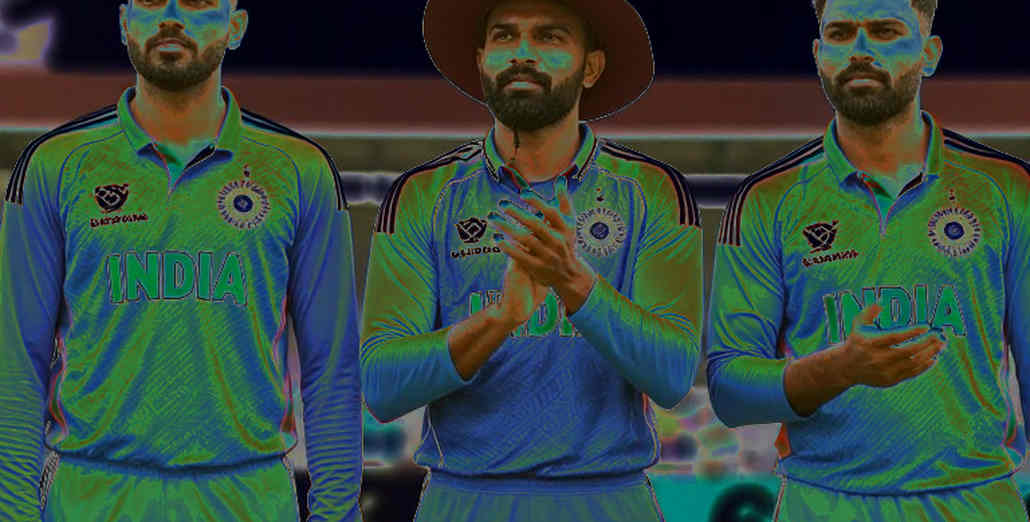
The silence between overs taught me that absence is still a formation. Formations work quietly, which is why their names never appear on the team sheet.
The next calculation
The ICC continues to experiment: extra reviews, adjusted time limits, refinements to umpire's call. The theory is simple. Every new rule hands teams more information. The reality is not simple. The more information a rule supplies, the more decisions a captain must make, and the more decisions a person makes, the faster their judgement erodes. The pressure of one review and the comfort of two are not the same condition; the second produces more errors than the first.
Over the next two or three years, the side that restructures its T20 fielding innings into three layers will gain an edge: train the wicketkeeper as an information carrier, keep the bowler as a limited information source, and give the captain permission to speak less and listen more. The rough estimate is six to eight runs saved per match. That is small change in T20, but its purchasing power is large, because modern T20 matches are decided by exactly six to eight runs, not by twenty.
When a captain next reaches into his pocket and pulls the review back out, no asterisk will appear on the scorecard. But months later, when someone sits down to reconcile the numbers, one question will still need an answer: was the match lost in that over, or long before it, in the fifteen seconds when nobody did anything at all?